Coming Soon: Acreage Reporting

Maize and wheatThough it may seem like you just selected your crop insurance levels and options for the year, acreage reporting will be here before we know it. Remember to keep note of your planting dates, crops, and acres to help ensure policy accuracy. Call Heather or Amanda at the office  at (605) 353-1112 once you complete planting or if you have any replant or prevented plant claims.

Image Credit: Uwe Pothoff 
 

Precision Planting: Try Before You Buy

You still have the ability to get the best out of your planter for the 2016 planting season. To help your planter perform its best we have implemented a “Try It Buy It” Program for this season.

Bauman Agency will outfit your planter with a Precision Planting 20/20 SeedSense for only a $500 installation and setup fee. You run it for the season and then decide if you would like to keep it on your farm. Please call Callee Bauman at (605) 354-6733 to learn more!

0601PrecisionPlantingLogo

Image Credit: USDA NRCS

Time to Consider Crop Hail Coverage

8808241108_6f16c17630_oIt is never too early to consider Crop Hail insurance on your crops. Rates don’t change throughout the growing season, so don’t gamble on Mother Nature. Policies can be put in place today that will cover your crops as soon as they are planted. Full coverage, deductible, and production based policies are available. Call Amanda, Heather, Curt, or Louise at (605) 353-1112 for a quote today. Our agents will work with you to find a policy that fits your farm’s needs and budget!

Image Credit: SF


There’s Always Room for Innovation

A couple of weeks ago, I was able to attend the National Farm Machinery Show in Louisville, KY. This particular expo is DakotaFest – indoors and on steroids. It covers 27 acres under roof and hosts everything from livestock equipment to the latest innovations in farm equipment. A common theme throughout the booths this year was precision application equipment. As we farmers try to cut costs without adversely affecting our bottom line, I am encouraged that there are so many innovative ways to improve our nutrient efficiencies. More effective use of our fixed inputs allows us to lower the overall cost of production per unit vs. 9385458134_9bdf17cbb1_ojust cutting costs in general.

Many exhibitors showcased tillage tools that increase residue breakdown while simultaneously reducing erosion. A huge concern of farmers across the United States is how to better hold the soil where we need it – in our fields. As we flew over the central Corn Belt, it was evident that wind erosion is occurring across a wide span of the country. I do understand that if no fall tillage was done in many areas of the Corn Belt, there would be no crop planted the next spring. It is painful to see soil erosion still occurring even though the dirty 30’s are long behind us and conservation tillage practices are commonplace. I have used “no-till” as a conservation practice for many years, but, in recent years, have adopted strip-tilling as a nutrient placement practice, therefore I do more ground work than a true no-till operation would.

Countless exhibits focused on precision application of seeds, chemicals, and fertilizer. Innovative products were displayed throughout the show. Case IH’s new high speed planter, which is a whole new planter built around Precision Planting parts, beefed up all of the components that might see added stress if there were to be a high speed interaction with a rock. John Deere added an upgrade to their older style planters to allow them to use Deere’s Exact-Emerge technology. Precision Planting has always been about upgrading your current planter, which is typically more economical than trading for new. If farmers aren’t buying new planters, they can still upgrade to the latest technology available through various attachments and products. In short, there are cost effective solutions out there for all planting issues.

Continuing to invest in technology and adopt new practices will enhance your bottom line.   At the same time crop insurance can provide a measure of protection. While we are in the Multi-Peril Crop Insurance sign-up period with a March 15th deadline, cover as many costs as you can. We are in agriculture for the long haul, so be sure to make your crop insurance decisions based on your long term goals – even when the short term outlook seems to be a little scary. My experience tells me that when we least expect it, an opportunity can come along that will change the dynamics of the entire year, so have faith and stick to your plan.

Image Credit: Daniel X. O’Neil

Precision Training Days: March 4th and 16th

March16_1

You’ve upgraded your planter – now upgrade your skills! We’ve planned two separate days of training for your convenience. Check the schedule below to see which day fits your needs! Please, remember to bring your 20/20, its power cord, and your charged iPad with you!

Friday, March 4th, 2016 – Huron Event Center

10:00 – 11:30 20/20 and Field View

11:30 – 12:00 Climate Field View

12:00 – 12:45 Lunch (provided)

12:45 – 1:45 Air Force

1:45 – 2:00 Break

2:00 – 3:00 Row Flow (bring your prescriptions to load)

Wednesday, March 16th, 2016 – Huron Event Center

10:00 – 11:30 20/20 and Field View

11:30 – 12:00 Climate Field View

12:00 – 12:45 Lunch (provided)

12:45 – 1:45 Delta Force

1:45 – 2:00 Break

2:00 – 3:00 vDrive/Speed Tube/vSelect (bring your prescriptions to load)

For questions or to RSVP, please contact Callee, Bauman Agency’s Premier Precision Planting and Climate Field View Dealer, at 605-353-1112.

Click here for more information!

Crop Insurance Customer Appreciation Mardi Gras: March 11th

Mardi-Gras-Hero-H

Bauman Agency invites you and your family to party on Bourbon Street for Mardi Gras!

Join us for our Crop Insurance Customer Appreciation Event on Friday, March 11, 2016 at our version of Bourbon Street: the Huron Event Center! A social begins at 6:00pm. Dinner is at 7:00pm.

Check out our flyer for more information, and if you have any questions please contact us at 605-353-1112. We Appreciate You!

Click here for more information!

Bauman Agency: From Your Side of the Fence

Planter with Flag

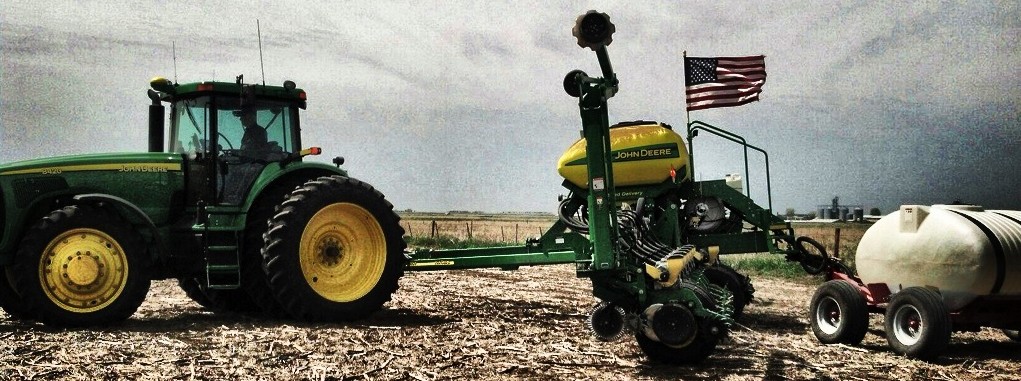
A family-owned and -operated ag business in Beadle County, South Dakota, for more than 25 years, Bauman Agency provides products and services to South Dakota growers that fit their unique needs, manage risk, and enhance profits with the integrity and honesty that can only come from someone who farms alongside you.

We strive to serve as a valuable member of their grower’s risk management decision-making advisory team, considering the farmer’s perspective when providing products and services. Because each staff member of the Bauman Agency team is also involved in a family farming operation we are uniquely qualified to understand your needs.

Bauman Agency, Inc. offers Pioneer Seed, Crop Insurance, and Precision Planting Technology sales and service from our office, 9 miles north of Huron, South Dakota. Seed, Crop Insurance, and Planter Technology…from your side of the fence.”

Farming with the Odds

4362170461_e09840b7a0_o

As I sit down to write this month’s article, my TV is tuned to the local news station while I await the winning Powerball Lottery numbers for the historic $1.5 billion jackpot. Like most people who purchased a ticket, I spent a few minutes (ok, maybe more than a few…) daydreaming about how I would spend the winnings if my numbers were chosen. Thankfully the subzero temperatures outside the store snapped me out of my fantasy of being on a yacht in the Caribbean. I eventually decided that I would keep farming until it was gone! While farming can sometimes feel like we are just playing the lottery and gambling on making a profit, there are a few main principles of risk management we can all follow to up our odds.

First, we need to know our costs. As this point in the 2016 crop year, we should already know what our seed, fertilizer, equipment payments, rent, and chemical prices are. There will still be some unknown variables, but we can come up with a close estimate of what each acre will cost to get the crop in the ground and off to a good start. This number may seem uncomfortably high, and we might look for shortcuts, but we need to be mindful of where the costs are cut. It is important not to cut costs in a way that negatively affects our profit potential. Decision management is 2016’s key element to controlling costs.

That being said, we also need to have a profit goal in mind. Are you shooting for just breaking even, or is it your goal to raise the largest crop ever on your farm? Knowing where we want the bottom line at the end of the year will help decide what risks to take, costs to cut, or where to splurge. It is also important to lock in profits whenever possible. While farmers realistically won’t expect to see $8 corn like a few years ago, always pay attention to the markets and try to contract a profit when an opportunity presents itself – even if it is not extraordinary.

One of the most lucrative decision management tools a farmer can use to aid in risk management is his Multi-Peril Crop Insurance policy. Crop insurance is used as a means of helping farmers cover costs of production. There are several different coverage types and options to choose from to customize your own policy to fit your farm’s needs. Revenue Protection and Yield Protection will give guaranteed revenue or bushel amounts. These policies help protect against uncontrollable variables such as adverse weather, dramatic swings in the markets, and other naturally occurring losses. Policy options are available as add-ons to increase coverage in the event of prevented planting, widespread loss years, or outdated yield information. Farmers are encouraged to work with their crop insurance agents to build a policy that suits their risk management needs without being too costly.

Well, the winning numbers were just announced and I didn’t have a single digit that matched. I guess it is back to the grindstone tomorrow. It is nice to know that even though I am not a billionaire, I still have the risk management plan and decision management tools to keep farming for years to come – without having to make a dicey wager. I’m not sure if I would know how to sail that yacht on Lake Byron anyway.

Image Credit:Amespiphoto 

Climate Change: Are We to Blame?

3694739568_e6c06bae81_o

Frequently on the nightly news, the major networks run fear-mongering stories on the rising polar temperatures, El Niño, and greenhouse gasses. While we should be alert, climate change should not be considered a bad thing in all contexts. If South Dakota had not experienced significant warming over the last 10,000 years we would still be covered by what geologists estimate to be more than 1500 feet of ice – that is over ¼ mile thick! That’s a lot of frozen water and I’m glad that I wasn’t trying to no till corn under those conditions! I’m not sure I would want to dodge those pesky dinosaurs either…

So what is the immediate risk of climate change to farmers in our area? First and foremost, we need to acknowledge that our environment is ever changing and that even though we influence it to some degree, we do not drive the forces that are changing. According to Mark Seely, MN Extension Climatologist, the Midwest will move away from times of frequent, smaller amounts of widespread rainfall to times of fast, larger rainfall amounts less frequently. This means we are less likely to see light rainfalls that fall all day or over several days’ time, and more likely to experience events of heavy rainfall that lasts for a very short amount of time, with more time in between rain events. Annual rainfall in Beadle County has actually increased about 2” since 1960.

I can recall the winter of 1968 when I felt I lived in “Snowmageddon.” Our area got many lengthy snowstorms throughout the winter. We had to move it every single day before we could even start our daily chores. Maybe my memories of that winter, and several others similar to it, make me think that any move toward global warming is good!

Farmers, by nature and necessity, are good stewards of the soil, but we can always make improvements. The no-till practice has made central SD a grain producing powerhouse. We have learned to plant and produce in conditions that just 20 years ago would have been considered absurd. Who would have thought that we could grow a bushel of corn on 33% less Nitrogen than just 30 years ago thanks to better seed genetics and biotechnology? Are we at the top yet? NO WAY! We are just beginning to unlock the secrets of exactly when our crops need nutrients and how much at each stage. Our next challenge is to figure out ways to get those nutrients applied on time, but not too early so that they are lost to the environment.

If dramatic swings in weather is a forecast of the future, then crop insurance will play an even larger role in a farmers risk management portfolio. Crop Insurance is important to both farmers AND consumers alike, ensuring the safest and most reliable food supply in the world. Looking ahead to the next 35 years (2050) it will be important that consumers are educated as to why we farmers do what we do. How and when you apply nutrients should be an economic and environmental win/win for all sides in our symbiosis. A secure and safe food supply will be even more of a challenge as we move to support a 9 billion person world population. What works today may not be the best management practice of 10, 20, or even 30 years down the road. As our world changes so must our farming practices to keep ahead of demand.

I have the utmost confidence in the American farmer to adapt and meet those changing goals.

Image Credit: L. Braughler

Dreamin’ of a Long Winter’s Nap?

“T’was the night before Christmas, and all through the house, not a creature was stirring, not even a mouse…And mama in her kerchief, and I in my cap, had just settled down for a long winters nap…..”

65762029_978a342665_o

Ahhh! Those were the good ol’ days! Remember when we purchased our seed in February? Remember when Pioneer was owned by Pioneer and John Deere just sold machinery? Remember when Congress acted? As I remember it, life was simpler then. But, I’ve got no time for reminiscing!

The combine needs to be cleaned. Planter units need to be removed from the planter, checked, cleaned and calibrated before they can be tucked in for winter. Strip tilling needs doing before the snow flies. Fence needs fixin’. Hay needs haulin’.

My crop insurance agent wants my production – yesterday. I need to meet with the tax preparer so I know what to do before the end of the year, and the banker is getting impatient. Which reminds me, my iPad is still in the combine.

Wait a minute there’s a text comin’ in on my smart phone. Corn is up! Wait, here comes another one. Corn is down. Excuse me, I have to check my Twitter feed. Hmm looks like South America’s soybean crop may be a good one. Now to check this web page to see what the EPA is up to today.

I’ve got someone’s 20/20 here and need to analyze some data for them. First glance tells me the stand was poor, not enough down pressure. Was there enough nitrogen to meet their yield goal? Got a Facebook Christmas greeting from my cousin in Oregon announcing that she’s sworn off GMO’s, red meat, and high fructose corn syrup, and is eating organic, and strictly from the grocery store, just to be safe. (Hope she washes her lettuce reeeal good!) Here’s another text. Margins are tight. I already knew that one!

All of this “incoming” information lands in our laps while at the same time we find ourselves in a tight-margin world. Our heads aren’t just swimming, they hurt! Just as farmers are looking at ways to increase efficiencies and still increase yields to be profitable, so are ag companies. News or rumors of potential mergers, sell offs, or purchases are common place in today’s ag news. The tight margin environment is true for the farmer and his supplier.

Earlier this month Precision Planting, a Monsanto owned company that produces after-market technologies for planters, was purchased by John Deere. We can speculate on why this change in mega corporation ownership occurred, or theorize that the purchase was to eliminate competition. But my long winter’s nap will be more easily attained if I take the view that John Deere recognizes the “tight margin” environment for the ag producer today and is aware that many farmers will need to make adjustments to current equipment, rather than trade for new.

What can be done to sort out all of this information and make an action plan for a profitable 2016? Count on your team of advisors. Your seed supplier, your agronomy support specialist, your equipment and technology providers, your financial advisors and your crop insurance agent will all be helpful in developing a workable plan.

With that in mind, consider attending the Planting Clinic we are hosting December 15th at our Bauman Agency Service Center 9 miles north of Huron. We will help you sort out the incoming and provide valuable assistance in planning for a successful outcome in 2016. Most of all, you’ll sleep like a baby during that long winter’s nap!

Merry Christmas to all and to all a good night!

Image Credit: Kanko*