Why Monitor What You Can’t Fix?

I am getting my shoulder fixed today. By the time this article is published in the Prairie Tracks I’ll be two weeks into my recovery and physical therapy, and on my way to a pain free and useful rotator cuff.  (I am really hoping that my time in the combine this fall will be with two useful shoulders).  Of course, it has taken a while to get to this point.  I moved from ibuprofen, to Aleve, to cortisone shots, to, “Well, we have monitored this downward progress long enough.  It’s time to fix it.”  I can’t say I am looking forward to going “under the knife,” but I am pretty thankful my shoulder can be fixed.

A tv ad I’ve seen recently poses the question, “Why monitor what you can’t fix?”   Isn’t that the truth?   Discovering there are problems when it is too late to fix them is the ultimate frustration.  In my line of work, while walking my fields, or those of my Bauman Agency growers, seeing planter/planting errors that could have been prevented or corrected immediately — during the planting process — is painful.
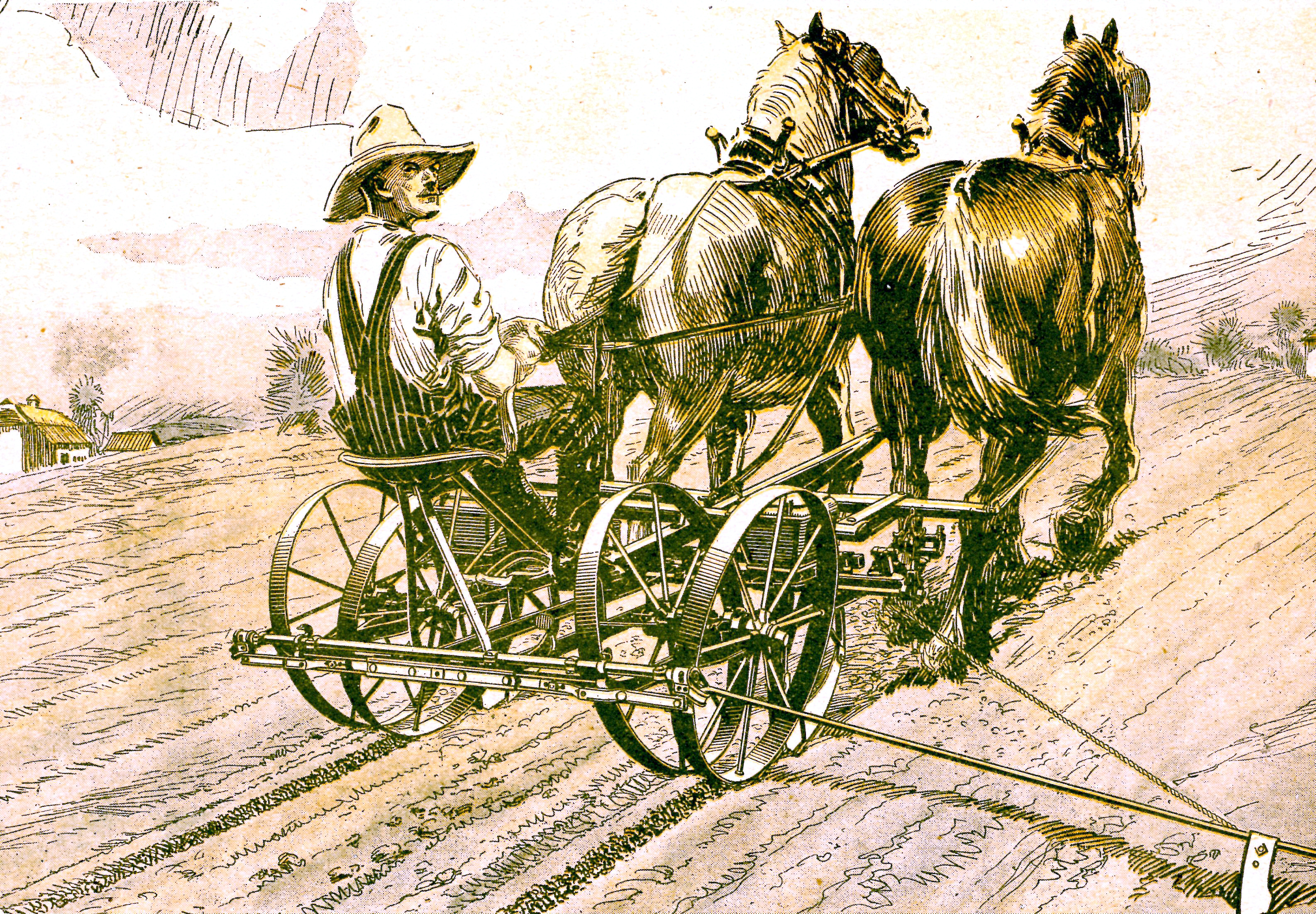
12310790726_877644e3a3_oDropping the planter in the ground, not looking back, and expecting positive results is reckless.  (Although I am always amazed at how Mother Nature rescues my/our screw ups.)   Gone are the days when crop producers could depend only on standard planter monitors, found commonly in a typical farmer’s tractor cab, which tells that the planter is working and that seed is dropping from the planting meter.  Yes, traditional planter monitors alert the grower if the planter is planting but many planting issues may be occurring that the grower won’t discover until it’s too late to correct them.

A one day delay in emergence of a corn plant translates to a 7-10 day delay in tasseling. These delayed plants will be “bullied” by the healthy ones by taking nutrients away from those slow growers, resulting in lower yields.

We have moved beyond basic monitoring of getting the seed into the ground with our planter.  Now we have the ability to know that each seed is at an optimal spacing and that each seed is placed at the desired depth.

When I began farming in the late 60’s I planted in multiple-pass, tilled, soil. As we have moved to minimum till/no-till practices we are demanding more from our planters than we even imagined 25 years ago. As planters have become larger it has become critical to have each row planting accurately, not just the average of all the rows that a standard monitor would show. Just buying a new planter, without incorporating the latest technology, is a rash move. New does not automatically mean more accuracy.

The demands on the 21st century farmer require optimum yields in all and variable planting conditions. Choosing to ignore planting errors is just too costly. The technology is here, and being used, to control and repair planting variables, on the go.   Now, how cool is that?

This month, at the Bauman Agency, we are focused on a couple of Precision Planting programs that we are excited about. This program features 20/20 Seed Sense monitors, vDrive, and Delta Force.   The combination of all three allows for precise control of down force and seeding on each individual row of your planter. Isn’t it time to take the first step? I encourage you to check out these affordable opportunities. Choose to monitor and fix.

Image Credit: Don O’Brien

Make the Precision Decision

You can have it all: precise control of down force and seeding, on each individual row of your planter. Make the decision to get the premium individual row control combination of DeltaForce and vDrive between now and August 15th and you’ll receive $150 off per row, as well as $1,000 off** 20/20 Seed Sense. You may also be eligible for 1.99% financing for 36 months. Contact Callee or Jonathan today at (605) 353-1112.

PrecisionDecision

Featured Image Credit: KellarW

Free to Eat in the USA!

With this year’s crop finally in the ground and long summer days upon us, one of my favorite holidays, Independence Day, is quickly approaching.  The 4th of July gets me thinking about all things American – apple pie, family gatherings, the Stars and Stripes, ice cold Coca-Cola, and fireworks.  (What summer holiday would be complete without copious amounts of colorful explosives?!?)

14693508504_b8ed5cbcc6_o

Independence Day also gives me the opportunity to reflect on why I am thankful to be both a citizen AND farmer in this great country.  While it can be easy to get engulfed in pessimistic views, the United States is full of opportunities and freedoms that many parts of the world do not get to enjoy.  American agriculture is often portrayed in a negative light, but many people fail to notice that it plays a noteworthy role in those very privileges.  Since the “average” American consumer has little to no connection to those of us who produce our nation’s bounty, it becomes more important for each of us to be willing to tell our story.

American citizens, as consumers, have come to expect high levels of choice and availability of products.  Because of those expectations, agriculture is one of this country’s largest industries.  According to the American Farm Bureau Federation, more than 21 million American workers produce, process and sell the nation’s food and fiber.  They also state that today’s farmers produce 262% more food with 2% fewer inputs (labor, seeds, feed, fertilizer, etc.), compared with 1950.  Farmers work very hard to produce high-quality, marketable products, which allows us to have one of the safest and most abundant food supplies in the world.  This allows households to have more disposable income as only 6.8% is spent on food.  This can be compared to approximately 15% in Europe and as high as 45% in Pakistan.

American agriculture is also very diverse.  Farmers across the country raise everything from fruits, vegetable, meat, and milk for food, to cotton for clothing, corn for ethanol, and even eggs for incubation of vaccines. There are more products and by-products directly from agriculture than one can truly fathom.  This product diversity allows consumers to freely choose what kind of lifestyle they want to follow, whether it is carnivorous, gluten-free, vegetarian, pescetarian, or even the extreme vegan. Thanks to American Farmers, products for all of these lifestyles are affordable AND attainable.

Though it is often overlooked, farmers are also excellent stewards of the land.  They habitually employ practices that concentrate on conservation and preservation of natural resources.  Many methods are utilized while keeping soil, air, and water quality in mind.  The environment is how farmers make their living, so, of course, they do what is necessary to care for it.

On the 4th of July I’ll be attending a picnic with my family, eating an all-beef hotdog served up on a soft bun made from regular white wheat flour.  You may be having a vegan soydog on an organic, gluten-free hotdog bun.  Either way, appreciate your options and thank a farmer!

Image Credit: JDmoar

Are We Planting Seeds for the Future of Agriculture?

It’s planting season. The central theme at the Bauman house in the months of May and June has traditionally been planting! Everything in our family life is arranged around that central theme. No social engagements can be committed to because of it and all meals are planned for and around it. In short, my schedule is “the” schedule. And really, can life get any better that that?

But, this year, planting has taken a back seat to another important event: high school graduation! There is a graduation gown hanging on the bedroom door de-wrinkling and college mail laying all over the place. We have been to the last band concert, the last vocal performance, the last debate banquet, and the last national honor society banquet. We’ve been to the last conference and we worked the last post-prom party. (Not to worry, somewhere in there I have planted a few acres!) Our fourth, and final, graduate is busy planning his future.

shutterstock_372718903

Throughout this month and into the next, there are thousands more young South Dakotan men and women graduating from high school. Some are from farm backgrounds; all of them, whether they know it or not, are affected by AGRICULTURE. It’s our state’s largest industry and touches, in some way, everything and everyone in South Dakota. Just like at our house, those students are plotting a course for their futures. Will they enter the adult work force right out of the gate? Will they study online or enroll at a technical school? Will they head off to college? What course of study will they take? Will their choices lead them to remain in South Dakota? At our house, the decision of where to attend college and what to study has been a difficult one.

During college visits here in South Dakota, we learned that no matter what college you may choose, or the major you declare, the future job opportunities that we heard about all revolved, in some capacity, around agriculture. This was a fact that our student found quite surprising. When others discover that fact, will they be pleased, or disappointed?   Do they believe there are ample opportunities for them in agriculture, and in South Dakota?   And, more importantly, is there?

South Dakota farmers have aged, many farmers are now part-timers, and farms have increased in size while the number of farming operations has reduced. The 1980’s slump in the ag economy spelled hard times for agriculture in the state and pushed many out of production ag. Some of us who did survive it found ourselves discouraging our kids from coming back home to farm, hoping to spare them the economic hardships we had undergone.

It seems obvious to us that the world still needs to be fed, yet there appears to be a complete disconnect between the American public and where their food comes from. Those students who have participated in 4-H and FFA have a much clearer understanding than most, but, I wonder, who will come after us? Is the current agriculture career field enticing to our graduates? Have we done our part to create a setting that encourages their desire to work, live, and play in South Dakota? Are our actions continuing to create significant ag prospects for them?

According to South Dakota Secretary of Agriculture, Lucas Lentch, there is opportunity in agriculture in South Dakota. He reminds the present generation of ag industry participants that agriculture is continuing to evolve and that the need for powerful, creative minds is great. He prompts us to embrace these changes and to welcome the new.

Here is a little preview of what to expect from the future ag industry population and the American consumer. Those born between the years 1985-2004 are referred to as Generation Y. These “Millennials” have a “think” mentality and are interconnected with access to — and the mastery of — many “devices.” They are great multi-taskers, are technological geniuses, and function with constant electronic stimuli. This age group is socially inclusive, socially conscious, and supportive of the green movement.

As I watch my high school graduate cross the stage and receive his well-earned diploma today, I will wonder, will he choose to work in the ag industry some day? Will he stay in South Dakota?

If he does, will we be ready for him?


Time to Return Precision Planting Parts

4178265189_27e9b8f629_oPlanting season is a crazy time and despite our best effort things don’t always go perfectly. Getting those issues fixed and resolved, and you back up and running at 100%, will always be our goal.If you have nonfunctioning Precision warrantied parts from this season, they must be returned by June 10.

If you have questions as to if an item is under warranty, or if can be returned for credit, contact Callee at the office at (605) 353-1112.

Image Credit: Moyann Brenn

Precision Planting: Setting Your 20/20 and FieldView for Replants

For our growers facing the need to replant a field, here are the instructions for correctly setting your 20/20 and FieldView Cab that will make the mapping of these fields seamless.

nil

Replanting Fields:

Properly setting up your 20/20 and FieldView Cab will allow you to easily compare planting data across years and planting to harvest data.

  1. When replanting, DO NOT create a new field or a custom crop.
  2. When replanting fields, create a custom hybrid or variety. You may use the same hybrid or variety name with replant at the end (PO9929AMXP-Replant).

Doing this will result in the following:

  • Acres will continue to accumulate accurately, but the hybrids are reported separately in the planting summary so you can track original planting acres vs replant acres.
  • Replant maps will be painted over the top of the original maps.
  • Yield by Hybrid reports for data collected with YieldSense or Drive will still work.

If you are having any issues please contact Callee or Jonathan for any questions at (605) 353-1112.

Image Credit: United Soybean Board

Sun Setting on Precision Planting Try It, Buy It Program June 1st

Thank you for trying the 20/20 Seed Sense, we hope you have had a productive planting season working with our system and that you 2016 planting year was a success. We trust that our system has benefited your bottom line and delivered a reliable, easy-to-use resource to your operation. We want to hear about how the product has benefited you, what changed, and improvements you were able to make due to the monitoring software. Please give us a call at (605) 353-1112 to tell us all about it!

5797540042_45eb59e25a_o

We are confident you’ll want to purchase the system and keep it for the 2017 planting year, if not you must contact us by June 1st. Thank you again for participating in the “Try it. Buy it.” program.

Image Credit: Spinnakertog

Penny Wise or Pound Foolish?

Last month I attended the Commodity Classic (a trade show and Convention for the countries corn, soybean, wheat, and sorghum growers) in New Orleans last month, I have to say I came home a little down in the mouth. Each presenter warned us about the rough times ahead for agriculture. I was cautioned to watch every penny spent in 2016. Even though I didn’t disagree with them, I have to say Igot pretty tired of hearing it. Although the extra inches around my middle don’t help, I am feeling that if I tighten my belt much tighter, I won’t be able to breathe!

4255472730_4e170dbd83_o

Current economics make us consider and reconsider our management and purchasing decisions. Having a few years of farming experience under my rather tight belt, I also know that whenever most folks are being defensive in their operations, opportunities for growth and profit will pop up and I need to be watching for them. Still, there is only so much money to work with, so just where can I cut back and still not affect my opportunities for profit? One thought in the cost cutting thought process this spring is whether to treat soybean seed. Here’s my soap box take on that very question.

Soybean seed treatments such as fungicides, insecticides, protectants and growth promoters can be applied in varying combinations to the seed before it is planted, providing seed and seedling protection while it lies in the cool spring soils or the high residue fields commonly found in this region. Strong, healthy plants help ward off early season insect and disease issues. Increased root growth leads to more root surface area for greater uptake of nutrients. Soybean performance from treated beans can increase as much as 4.5 bushels an acre. We experience environments where Pythium and or Rhizoctonia (root/stem rot diseases) can have a devastating effect without some form of seedling protection.

No till and planting in cool soils (a condition that is typical until mid-June in SD) are both situations that call for treated beans. In South Dakota, since the widespread use of seed treatments began, the need to replant soybeans has diminished significantly – to nearly zero! Treatments make for a healthier, more vigorous plant. Interestingly, many farmers believe insect pressure is gone because they don’t “see” the high incidence of bean leaf beetles that they saw 10 years go. The truth is, those beetles are still around they just don’t like those treated plants as well, so their damage isn’t as visible any more.

In my opinion, in South Dakota, seed treatments are a vital risk management tool. Cutting out seed treatment as a cost reduction strategy is a poor risk management decision. Pay a few dollars up front and reduce the threat that could end up costing 3 to 4 times the investment. The number of service calls I make since the widespread use of seed treatments, is a fraction of what it was before. There is no way to effectively recover from poor emergence. It has to be planted right; you can’t go back in time and fix that.

Although rough times in production agriculture might be ahead I have some good news! Breathe easier – seed treatments for soybeans are available and will protect your considerable investment! We already know that we are going to take a hit on the soybean commodity prices, so don’t also take a hit on the yield by skipping your seed treatment protocol.

Image Credit: John H Kleschinsky

Get Fully Loaded Beans for Fully Loaded Bins

We know choosing when and how to plant is a big part of managing your risk every season, and Bauman Agency is here to help. Loading your Pioneer® brand soybeans with the protection of the Pioneer Premium Seed Treatment offering will help ensure your seed investment is well covered when it needs it most. The right treatment for your soybeans will reduce the risk in planting soybeans early in the season, when soils are cooler and wet, and grow strong healthy plants able to ward off early-season insects and diseases. More information on Pioneer Premium Seed Treatment is available here.

9623929772_2805baec80_o

Call us today at (605) 353-1112 for help in selecting the right varieties and treatment package to make the most from your soybean acres. After all, we’re Bauman Agency! We see seed and seed treatment from your side of the fence.

Image Credit: United Soybean Board

Meet our New Employees

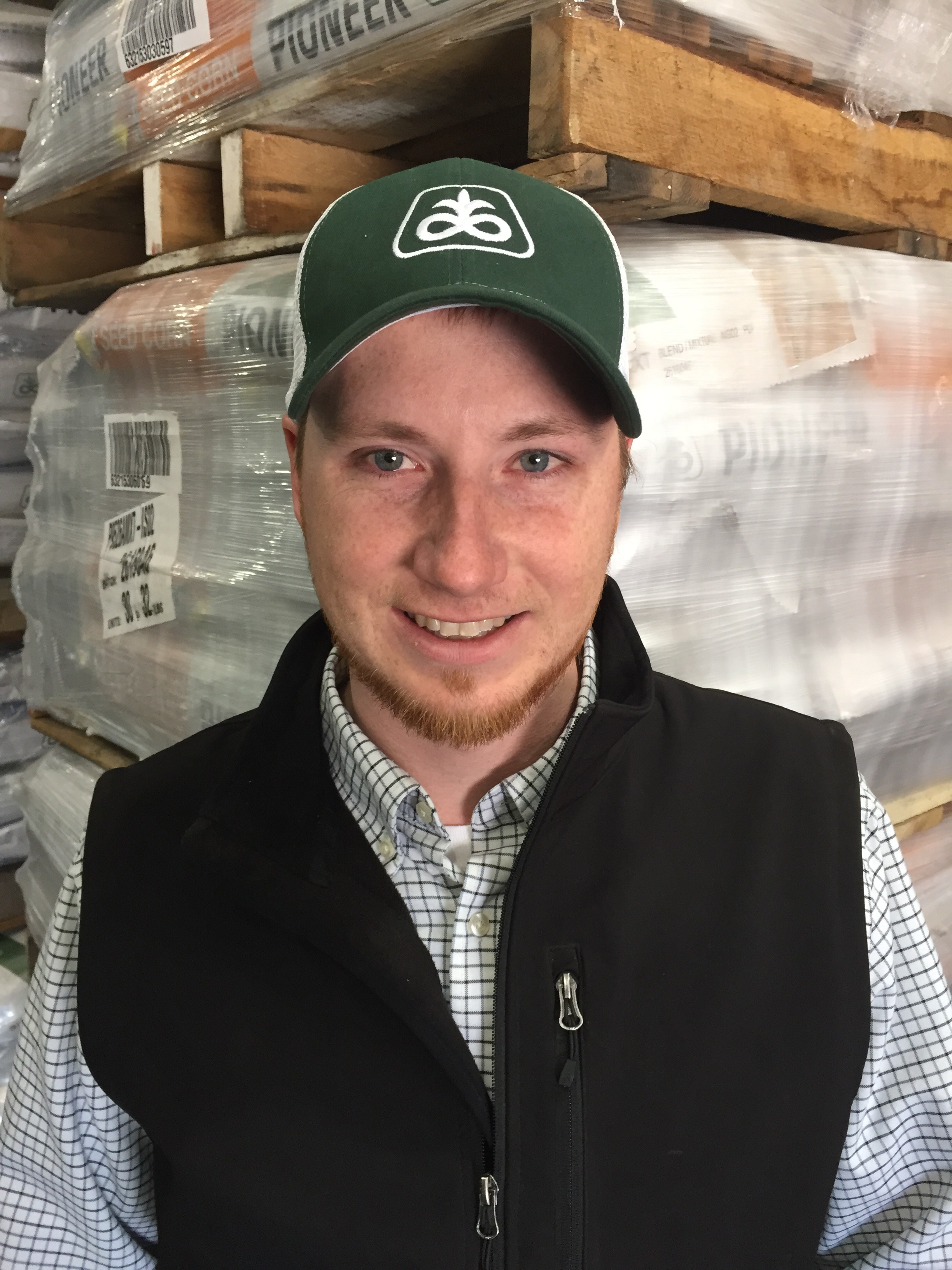
IMG_2163Wade Sabers joined our office in late February as a Precision Planting Tech and Inventory Assistant Manager. Wade will be a face you see this spring during seed delivery. He is a lifelong resident of Huron and has many years of experience in mechanics and technology. Hunting, camping, family, and snowmobiling fill his spare time. Be sure to stop in, say hi, and help us welcome him to Bauman Agency!


IMG_2205Matt Bischoff is our most recent addition to the staff at Bauman Agency. He will be working part-time in Pioneer Seed Sales and Agronomy Support. Matt will be a familiar face to many as he lives just a couple miles from the warehouse where he also farms and ranches with his family on Ravine Creek Ranch. His wife, Heather, is a Crop Insurance Specialist at the office, and they have 3 children—Parker, Reagan, and Easton. We are glad to have you here, Matt!