In this season of gratitude we pause to say thank you for your business and wish you a very Happy Thanksgiving!
You can find the full card here.
In this season of gratitude we pause to say thank you for your business and wish you a very Happy Thanksgiving!
You can find the full card here.
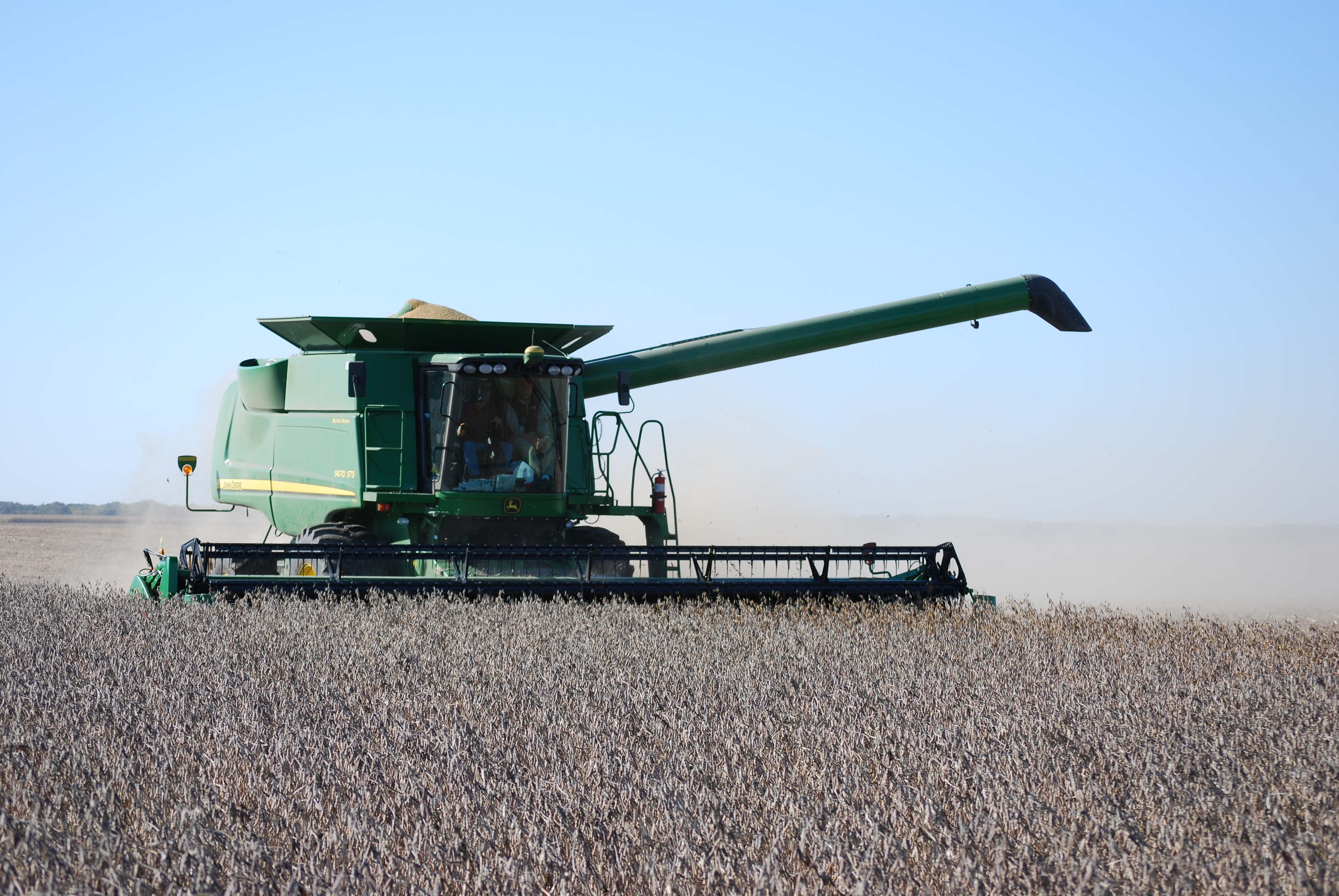
The seat in the combine cab is the best seat in the county. Talk about a room with a view! If you operate your own combine, nothing beats the vista before you. Harvest time in the combine provides me the chance to truly enjoy gathering the fruits of my labor. I see rich fall colors, spectacular sunsets, and starlit skies, plenty of deer and an occasional pheasant. During a harvest moon it is fun to shut the combine lights off for a moment and simply appreciate harvest by moonlight. My wife thinks I am weird, but I like to watch the ears of corn feed into the feeder-house and then, with a look out my rear window, I can see the grain fill the tank. Can it get better that that?
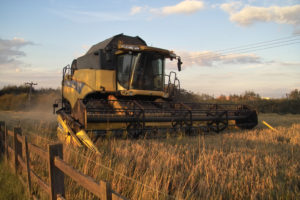
Image Credit: David Wright
Of course, sitting in my penthouse isn’t all “Better Homes and Gardens” and “HGTV.” From my perch I also see the weeds that escaped my herbicide program, the stand I got when I planted, the variations that show up from hybrid to hybrid and the beeping and blaring from my monitors telling me to make adjustments. My 20/20YieldSense monitor shows instant yield averages right before my eyes. That is of course, IF I calibrated my combine before I began to harvest each crop type. Even so, the information that is being recorded should always be verified by getting off the combine and checking inside and out, confirming that everything is setup and working properly.
My soapbox message this month is: Calibrate, Calibrate, Calibrate. You won’t really know what you have got without completing that necessary step. A properly calibrated yield monitor providing reliable data makes analyzing this year’s crop management choices accurate and easier resulting in a worthwhile plan for next year. This data is also a great resource to use when completing your crop insurance production report.
If you hire your combining done, don’t let the custom combine driver have all the fun- spend some time in the buddy seat to look for the issues and successes in your fields from that perspective. Analyzing your failures to make sure those mistakes are not repeated is probably the most important objective. Don’t rely on our memory alone, note and record the changes you need to make for next season. Use your smart phone, iPad, notebook, or lunch napkin but write it down! Gathering your information from your fields is the best way to determine your needs. I know how much I appreciate accurate harvest data when working with my grower’s in determining their seed needs. With the right information we can truly place the right seed variety to the right acre and meet the individual needs of our growers.
I have to say I agree with Lisa Douglas on her Green Acres farm, “I just adore a penthouse view! “ Don’t you?
Featured Image Credit: Anthony Arrigo
Our own Curt Bauman had the pleasure of talking to KWAT and KDLO radio’s Ag director, Chuck Langner, on 28 September 2017 to give him the Beadle County harvest update…from your side of the fence. Take a listen below!
One week later (5 October), rain continued to challenge us…but Beadle county ag growers kept plugging along!
A week later (12 October), Curt provided an update on the soybean harvest, with a look ahead to the corn harvest beginning for most growers. Listen in here!
Featured Image Credit: United Soybean Board
Just when you thought your 2017 corn crop had suffered every indignity that weather and the grain markets could dish out, another hit to the area’s corn arrived in the form of Goss’s wilt. According to research data from Dupont Pioneer, yield robbing Goss’s wilt and leaf blight is a bacterial disease that causes leaf loss, poorer stalk quality, and light test weight corn. Higher levels of corn residue from corn-after-corn production and reduced tillage contribute to the spread of the disease and these are both practices we see in this part of SD. Summer storms that produce hail, wind, or rain that damage corn leaves can also impact the severity of the infection and loss in any growing season. This year, there are farmers in our region that have experienced all of these weather events. Crops have rebounded in some areas with summer rains but another culprit looms that can reduce yields even more.
Goss’s wilt overwinters in infected corn residue and host plants such as green foxtail, barnyard grass and shattercane. From this infected residue, bacteria are transferred to growing plants. Bacteria invade the plant tissue through the wounds caused by hail, heavy rain, wind, or mechanical damage. Infection can happen at any stage of development. Wet weather and high humidity encourage the spread of the disease. Sadly, Goss’s wilt isn’t too fussy and will spread in hot dry conditions as well. Even if you remained in a drought area this year, you still are susceptible to the Goss’s infection.
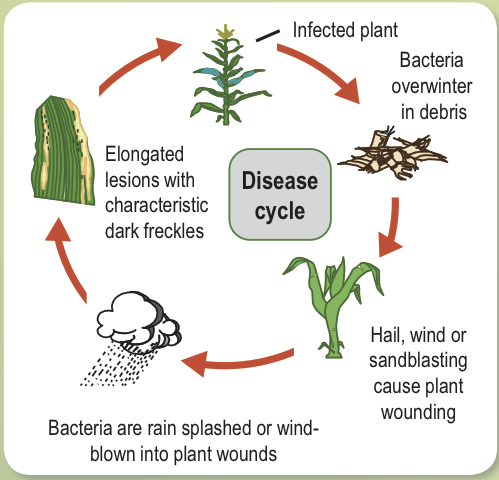
Disease cycle of Goss’s wilt in corn
Goss’s wilt is in our area and once it is here, it is here to stay. The disease, now a crop management factor for us, may be transmitted from field to field by tillage equipment, balers, and ever-present South Dakota wind. Management of the disease is critical. However, Goss’s wilt is a bacterial infection – not fungus, so foliar fungicides are not effective and there are no rescue measures available to control the disease. Crop rotation, tillage when practical, reducing crop residue, and minimizing grassy weeds can help.

“Varnish” on leaves give them a frozen appearance and they may eventually wilt and dry up
The primary method for management of this disease is hybrid resistance. Levels of resistance are rated in Pioneer brand corn seed using 1 (susceptible) to 9 (resistant) scoring systems. This fall, when making your hybrid seed selections to plant in 2018, visit with your seed provider about the hybrids that offer the appropriate levels of resistance for each of your fields.
For some growers in this area, the dismal growing conditions of the spring improved throughout the summer months. Hail, wind, and drought played a role this year as well. Though it can be frustrating to deal with these issues, it is amazing how resilient the corn and soybean plants are. Yields look much more promising than we deemed possible earlier on in the growing season. Mother Nature can deal out some tough blows as we have seen in hurricane affected Texas and Florida and Montana’s wildfires. Guess I‘ll stick with the hassles we’ve got. Wilt and all.
Featured Image Credit: Purdue University
Bauman Agency is pleased to introduce our Hybrid Yield Hero contest. The yield contest is for each individual Pioneer corn and soybean product from the 2017 growing season. Each hybrid winner will be displayed on a banner that will remain on the Bauman Agency “Wall of Fame” for the year. They will also win a personalized Bauman Agency jacket and an invitation for 2 to our Yield Hero Dinner.
Complete ALL of the information in the attached form and submit the entry form along with all production evidence to:
Bauman Agency
19897 SD Hwy 37
Huron, SD 57350
Reminder: All entries are due at the Bauman Agency office by December 1st, 2017.

Congratulations to Curt and Louise for 25 years of seed, crop insurance, and planter technology ….from your side of the fence. They are honored to serve South Dakota’s farming communities and look forward to another 25 years of service.

Please join us in congratulating Jon and Callee Wachter on the newest addition to the Bauman Agency family. Their youngest child, a beautiful daughter, was born on June 4th 2017. Evangeline Eddie Wachter joins a lively Wachter household, including Charleston (5) and Georgia (3). Welcome to the farm, baby Evangeline!

 As I contemplated the theme for this month’s ramblings, we were in the throes of an impending “no-rain disaster.” Growers were not interested in walking their fields with me to analyze their planter’s 2017 operating performance. The importance of a perfect stand seems minimal when dust is blowing across the field. Now that some relief has been granted, we need to look forward to 2018. The best time to discover needed planter improvements is when corn plants are small enough to analyze. For example, at this stage it is easy determine the timing of emergence, one of the key factors in determining final yield potential.
One of the newest tools from Precision Planting is the “Pogo.” This Pogo is not to be confused with the pogo stick of my youth, which I never did master. The art of bouncing and balancing at the same time (on a gravel driveway) eluded me. The Precision Pogo is an instrument used to help evaluate corn stands and planter performance. This device allows us to measure emergence, singulation, spacing, final planted population versus intended population and more. All of this information is gathered and put on scorecard to help us make the correct adjustments and needed improvements to our planters before we break them out to plant in 2018. This is a great tool and I encourage you to contact our office so we can schedule a field of yours to Pogo. Now is the time to look forward to next year!
As I marvel at state- of- the- art- technologies in agriculture today, like the Pogo and other Precision Planting technology planter components, I am feeling proud, lucky, and a bit patriotic. US Secretary of Agriculture Perdue recently released this comment: “Floods, droughts, and natural disasters are a fact of life for farmers, ranchers, and foresters. They have persevered in the past, and they will adapt in the future – with the assistance of the scientists and experts at USDA. To be effective, our research and programs need to be focused on finding solutions and providing state-of-the-art technologies to improve management decisions on farm and on forest lands.”
The American farmer has been persevering, adapting, improving, and advancing with good ol’ Yankee ingenuity for more than 200 years. While the weather is a factor that farmers cannot control, we CAN control how we respond to them. Utilization of the continued improvements in available technologies is one way to combat the effects of Mother Nature. Pushing crop yield barriers is something all farmers strive to accomplish. We can’t stop now, it’s the American way!
Image Credit: Torbakhopper
 It’s time to report your planted crop acres! Please pick up your maps from your Farm Service Agency and bring them and your planting information to us here at the Agency. We will assist you in completing your maps, and report your acres so you’ll need only drop your completed “as- planted” maps back at FSA. Acreage reporting is a critical step in determining your coverage and your premium.
We are happy to serve you in this process of providing an accurate report. This year the 15th falls on a Saturday so the official final deadline is July 17. Allow plenty of time to complete this process. No errors = no headaches! (We will be closed July 3 and 4 for the Independence Day Holiday.)
Image Credit: Ze’ev Barkan