Five Foundations of Financial Literacy: Money $heep

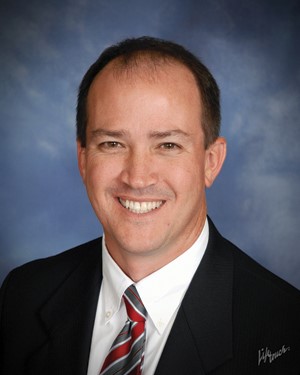
Carrie Wintle grew up on an area farm. Her promotion of financial literacy for youth of all ages is inspiring. I have asked her to guest author this month’s article of the Prairie Tracks for you to gain an understanding of the work she is doing. The ag community, and in fact every consumer, should be armed with these financial fundamentals, and learning them at a young age is all the better. An accomplished pianist, dancer, and recent college graduate with graduate school on the horizon; Carrie has now added children’s book author to her resume. I have ordered my copy of her children’s book, Mr. Money $heep, and, after I study up, I might let my kids and grandkids read it! I asked Carrie to tell us a little bit about herself and her book this month — enjoy!
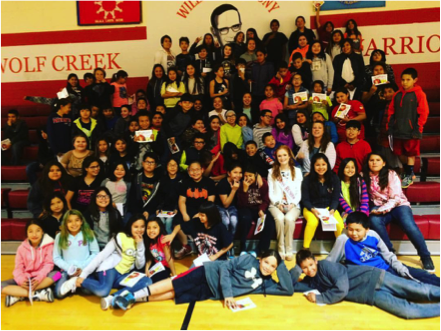
Carrie with some of her best students

The Origins of Mr. Money $heep

As a young girl, raised on a farm just South of Cavour, SD, I was heavily involved in 4-H. My love for animals was unbreakable and led me to try showing all of them in 4-H, even my cat (I wouldn’t recommend this). Eventually I stumbled upon the idea of showing a lamb. Soon after, I bought my first lamb, Pookie. Thus began a 10-year journey that grew from one lamb to a 40 plus sheep flock.

This experience, along with my interest and studies in math, led to my platform as a Miss South Dakota contestant, Money $heep. The goal of Money $heep is for youth to build a financial foundation from which they can tackle the financial world. Although I use my personal experience of owning lambs to talk about financial literacy, every student’s experience is different. The important part is for youth to learn how finances relate to their own personal life.

Money $heep is centered around the Five Foundations of Financial Literacy: budgeting, saving, income, loans/debt, and investment risk. These five financial topics equip youth with a base of financial knowledge they can use in their lives and the world. I choose to focus on this base of knowledge because it is critical for youth to learn the basics before advancing into more complex areas.

Think of it like mathematics. Students learn to add, multiply, divide, and subtract in elementary school before advancing into harder classes. If a student never learns the beginner topics in math, they will not be able to learn the harder topics. He or she will continue to progress through math classes without understanding the material. The same is true for finance. If youth neglect the basic financial concepts, by the time they reach adulthood they will be unable to truly understand harder topics.

Money $heep’s action plan involves an extensive speaking tour. As a contestant, I visit schools throughout South Dakota to speak about the Five Foundations of Financial Literacy. Every speaking engagement is different because all students have unique needs. I strive to make each presentation impactful by relating it to the audience and students. Furthermore, I authored an illustrated book called Mr. Money $heep with artist, Rayna Pearson. The book is written in an interactive, play format that allows the students to take part in the learning experience. The book can be purchased on Amazon, with all profits going towards purchasing books for students in South Dakota. Finally, thanks to a sponsorship from White Oaks Wealth Advisors, I donated 800 copies of Mr. Money $heep to the Rosebud and Pine Ridge Reservations in South Dakota.

Getting to travel the state to talk with students about Money $heep and the Five Foundations of Financial Literacy has been a blessing. Using my Finance and Accounting degree from the University of South Dakota to help youth build their own base of financial knowledge is exciting and rewarding. I am excited to see how Money $heep can help more students in the future.


 

Just One Thing at a Time, Every Time

Farmers today (and every day) hear about something he/she should be doing better, faster, and more efficiently. Every day brings another new technology to embrace, understand, and use. Every day there is news to digest, EPA warnings to heed, markets to watch, and opportunities to capture. Every day there is more to consider than there was than the day before. It seems that just when you upgrade to the latest/greatest whatever, someone comes out with a better idea. The speed at which information comes to us can be overwhelming and the volume of that information quite daunting. Perhaps the solution to riding the information train and avoid being left behind is this “Just One More Thing.”  How can I adopt just one more thing for certain aspects of my operation over time rather than implementing dozens of them spontaneously just trying to keep up?

Earlier this month, Bauman Agency hosted a day-long training for our customers focused on crop market outlooks, crop insurance and planter updates, technology, and crop management. We called it our Just One More Thing training with the goal of providing at least one good take-home piece of information from each segment of the day.

We were fortunate to host crop market expert Rich Morrison from Jacksonville, Illinois of Diversified Services. Rich presented his crop market outlook for 2017 and highlighted the tools to use to capture prices to meet goals and manage risk. Crop insurance was included in his list of tools as well as a new private product called Price Select. Price Select allows insureds to add months other than February and October to set their crop insurance price guarantees. The concepts that Rich talked about that day were, in my opinion, right on the mark. While he was speaking, I am pretty sure I was nodding my head to many of the suggestions he made. He cautioned us all to know our historical cost of production in order to know when we are approaching a good marketing opportunity. Guess I now have my One Thing from that session.

We also heard Bill Lankswerth’s counsel on ag financial risk management. Bill, from Louisville, KY, representing Agri-Financial Services, specializes in the development of positive financial relationships with lenders. His advice centered on how and what to compile and document to gain the support of our bankers.   The concepts that Bill talked about that day were, in my business partner’s opinion, right on the mark. (My business partner also happens to be my wife.)  While he was speaking my wife was nodding her head to each suggestion he made. Having a documented management approach for our farms was paramount to long term success. He insisted that a written overall strategic plan, including yield protection with crop insurance, product marketing and cost control was essential to gain bankers support and ensure long term profitability. My wife was all smiles! She likes to remind me that if a plan or goal isn’t written down, it doesn’t exist! I am a shoot-from-the-hip kind of guy and I find this process annoying, but, I had to admit that I now had my One Thing to take home from Bill’s session.

Decisions made about crop insurance coverage prior to March 15th are long term and remain in effect throughout the entire crop year. I truly believe that crop insurance coverage choices must be made with your goals for your operation and your risk management needs and crop marketing goals in mind, with an agent that understands and supports your goals. There is no one size fits all to crop insurance. Your risk management and marketing plan needs to be tailored to your needs. Visit with us about your farms coverage and get a quote for Price Select. This might be the One Thing that brings your best returns in 2017.

Image Credit: Will Scullin

Crop Insurance Deadline: March 15th

To be sure we provide the best coverage possible for you and your operation, we have scheduled an appointment time for your annual policy review. Watch your mailbox for your appointment letter and let us know right away if your scheduled time needs adjusting. We look forward to visiting with you soon. Thank you for insuring with us.

Image Credit: Dafne Cholet

Meter Madness

Bring your vacuum planter meters into Bauman Agency and we will clean them up, repair, run, and calibrate them for your population and planting speed and all for $25/ a row!* You will receive a report/per row on the accuracy of your meters.

Running your meters at least every other year and annually if you run through a lot of acres is vital! Ignoring this maintenance issue can be so costly to your yield. If you don’t get it in the ground right…you can never make up for it. Do Not skip this step!

With ­­­10 years of experience running meters here at Bauman Agency you can be assured that your meters are in good hands! Kevin Kleinsasser is a mechanical engineer and grain farmer with a great deal of Precision Planting training and experience with Precision Planting equipment on his own farm. Jon Wachter also runs Precision equipment on his acres and he and Wade Sabers have extensive Precision training and do an exceptional job with your meters.

Need us to pick up your meters? Give us a call!

March Madness Bonus!

Choose the winning team at Bauman Agency to run your meters and one team in the Final Four in Basketball’s March Madness and you may have your meters run for free!

This promotion expires March 10, 2017.

*Finger meters can be serviced for an additional $5 per row.

Image Credit: Carolise

Time to Report Production

To those multi-peril policyholders who did not have a crop insurance loss in 2016, it is now time to complete your production reports.  Processing your production before your annual policy change meeting allows for a more accurate quote for the 2017 crop year.  Required production evidence can include assembly sheets, proof of yield statements, silage appraisals, bin measurements, and load records.  Call the office today at (605) 353-1112 for an appointment to report your yields.

Image Credit: Derek A. 

Annual Crop Market Outlook: Friday, February 10th

Bauman Agency presents Rich Morrison, Risk Management Analyst from Diversified Services, with his annual crop market outlook on Friday, Feb 10th at the New Nordby Exhibit Hall on the state fairgrounds at 10am. We’re Bauman Agency, where we see  crop insurance from your side of the fence!

Meet the 2016 Yield Heroes

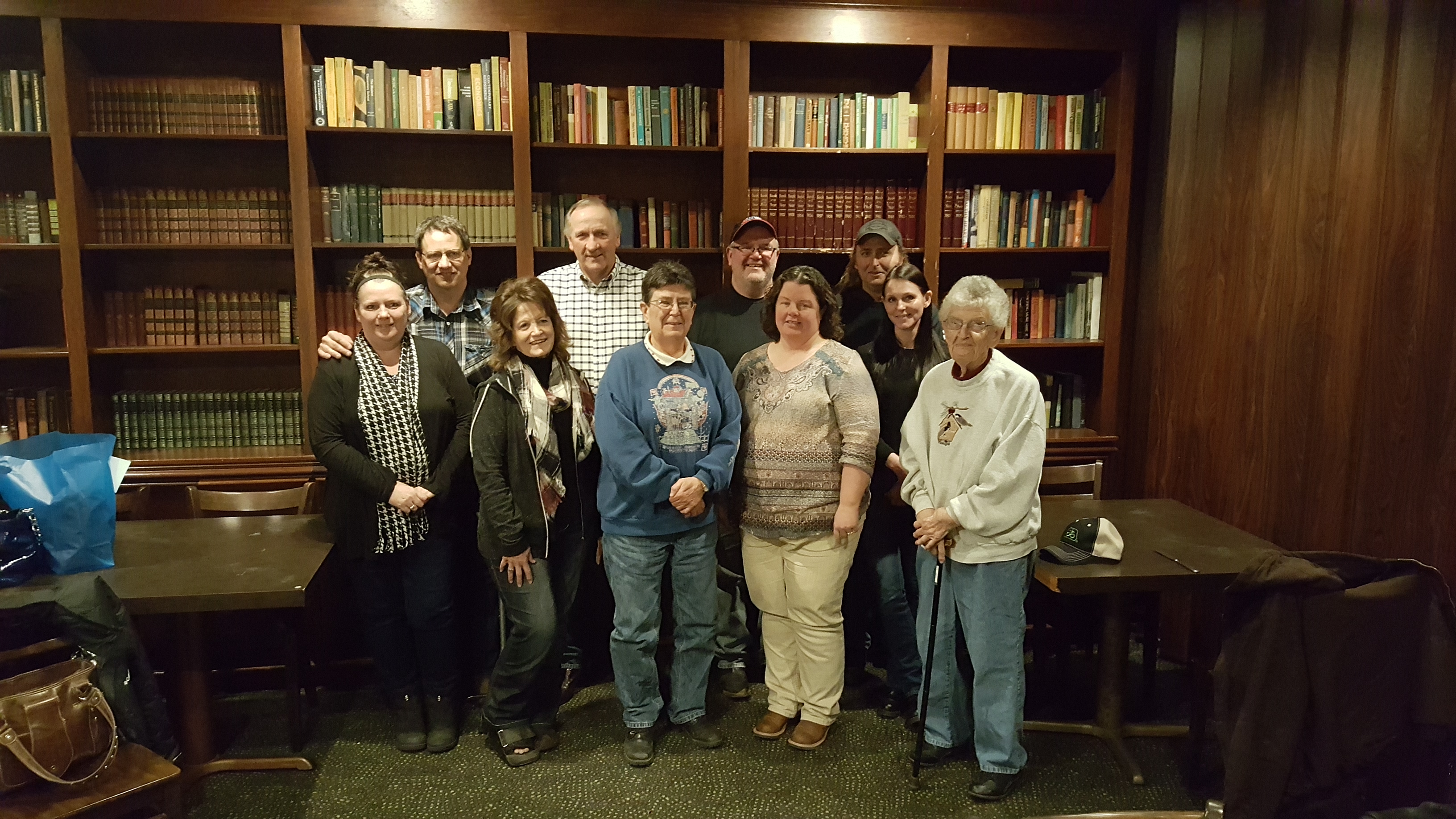
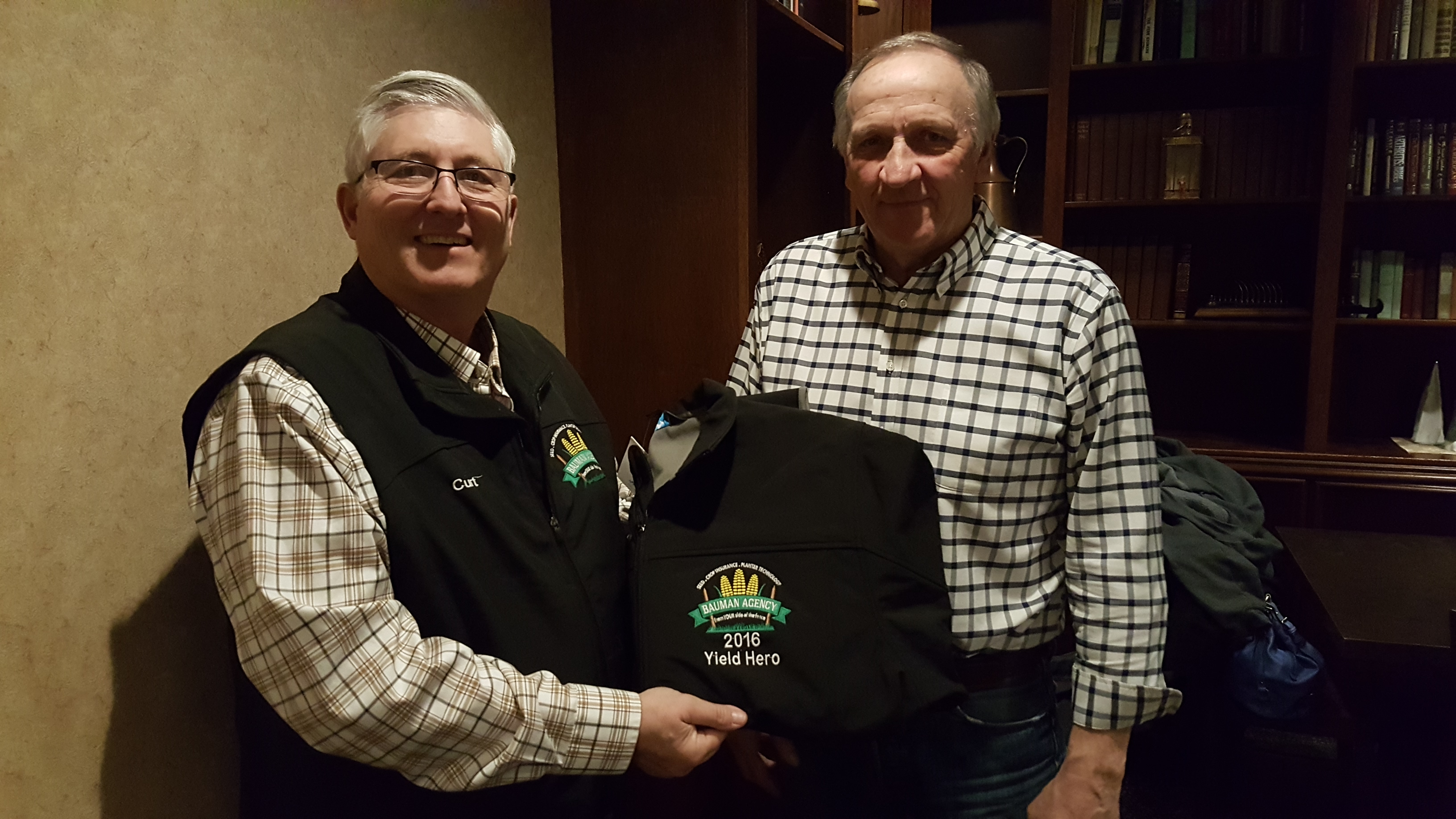
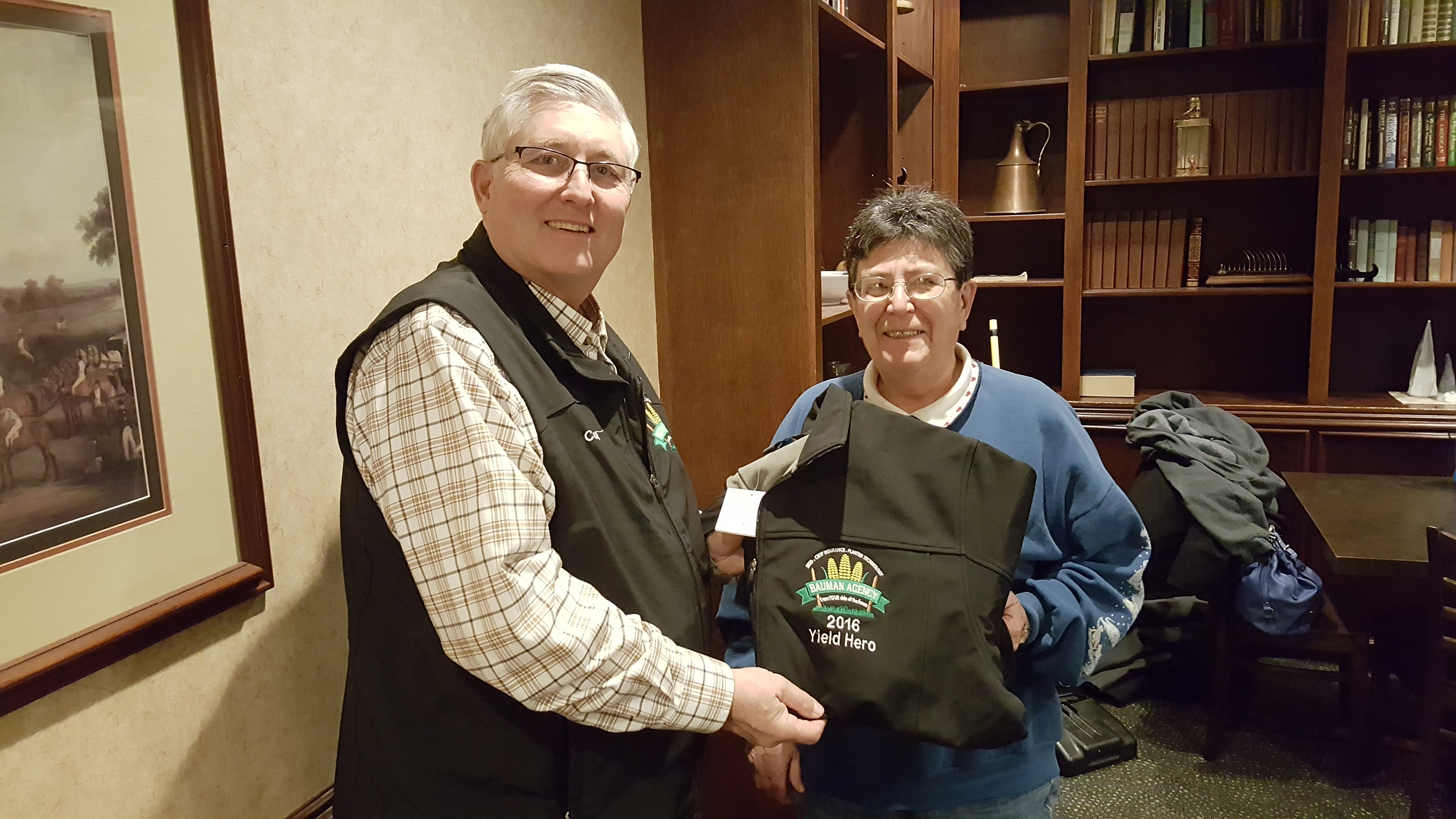
Congratulations to Bauman Agency’s 2016 Yield Heroes! Our first annual Yield Hero Contest was announced in September on our website and through a mailing that was sent to all of our Pioneer seed customers. Our growers were eligible to enter a yield result for each Pioneer variety planted. These 2016 Yield Heroes were honored at our first annual yield hero dinner where they were awarded their 2016 Yield Hero jackets.

Congratulations to…

Curt Bauman (left) and Scott Slepikas (right)

Scott Slepikas, winner with Pioneer P0339AMXT, Irrigated with 247.69 bu yield

Curt Bauman (left) and Steve Boomsma (right)

Steve A Boomsma, winner with  Pioneer soybean P18T26R2, Non irrigated with a 70.6 bu yield

Curt Bauman (left) and Dave Brooker (right)

Dave Brooker of Brooker Farms, winner with Pioneer corn P9188AMX, non-irrigated with 173.3 bu yield and irrigated Pioneer corn winner P0157 208.8 bu

Curt Bauman (left) and Peg Brooker (right)

Peg Brooker of Brooker Farms, winner with Pioneer corn P9188AMX, Non irrigated with 173.3 bu yield and irrigated Pioneer corn winner P0157 208.8 bu.

Curt Bauman (left) and Kevin Kleinsasser (right)

Kevin Kleinsasser  (and Kenny, not pictured), winners with non-irrigated Pioneer corn  P9703 155 bu yield, P0297 202 bu yield, and P0533AM1 192 bu yield and Pioneer non irrigated soybeans with  P20T79R2 55.7 bu yield and P22T69 with 67.6 bu yield

Not Pictured are Joe Chase with non-irrigated Pioneer corn P0339AMXT 220.48 bu yield, and Riverside Farm’s Sam Waldner, with irrigated Pioneer Corn varieties P0533AM1 192 bu yield and P0589AM 268.96 bu yield.

What a pleasure it is to work with growers who continually strive to improve yields! Congratulate them when you meet these progressive growers!

Just One More Thing

Every year I attend several one or two day conferences to and earn credits and maintain my Certified Crop Advisor accreditation. Subjects each year cover soil health, plant diseases, new pesticides and Insecticide interactions, and the latest in new equipment and technology that ag has to offer. Having been out of college for more than just a few years, my brain starts to fog up and I must take a day or two after the conference to reflect on what was presented. Usually, after mulling over the information that I was exposed to, I come up with an underlying theme. This year, my take away thoughts go to “just one more thing.”

I love to “adjust” things or try to tweak a piece of equipment to get it to perform just a little bit better than it was when I first tried to operate it. Surely, my idea is even better than theirs! This is in direct conflict with the practice of thinking “if it isn’t broken, don’t fix it” that I have been using in my herbicide programs for the last several years.

This year’s conferences carried a common theme on weed resistance. If you have a program that you feel is working perfectly, you better add something to the mix or you could end up with severe weed pressure from weeds that have adapted resistance to your current management program. This involves learning to identify herbicide families and how they work, then using at least three herbicide families per field per year-just one more thing I need to worry about. In 2017 I will add dicamba resistant soybeans to battle weeds.

When I first let my daughter, Callee, convince me that I needed a 20/20 planter monitor, I did it as a favor to her, because I already knew everything I needed to know about my planter….boy was I in for a surprise! 

Until I could quantify the planting errors that I was making in dollars and cents, they were not in my focus at all.   Once again I had to admit that Callee was right when, several years, ago Precision Planting’s automatic down force, called Delta Force, became the next one more thing which helped me break through yield levels that I never imagined reaching. For 2017 I am adding v-drive (electric meters) to control variable rate seeding and row shutoffs.

Split application of fertilizer is also on our 2017 cropping practice target, so, this year I am looking at several one more things! Split application adds that final push of fertilizer to reach the optimum yield potential on each acre farmed, not field potential but rather dialing in on each acre’s potential. Many one more things could be added to current practices without adding many total dollars to expenses while delivering the highest possible profits.

Plan to attend Bauman Agency’s “Just One More Thing” seminar on Feb 10 at the Nordby 4-H Exhibit Hall on the SD State Fairgrounds. Get insights into 2017 crop market outlooks and new crop insurance strategies as well as the latest in planter enhancements available to make your planter run better than when you bought it. Hopefully your head fills with ideas and you find your just one more thing to make 2017 the best year possible. See you there.

justonemorething2

Happy Thanksgiving!

Bauman Agency will be closed Thursday, November 24th and Friday, November 25th so that we can celebrate the Thanksgiving holiday with our friends and family. We will reopen, ready to serve your seed and crop insurance needs, at 8:30am on Monday, November 28th.

All of us Bauman Agency wish you a safe and peaceful holiday!

Image Credit: Tim Sackton

Taking the “Scare” Out of Resistant Weeds

Halloween. Ghosts, ghouls, goblins, mummies, witches, zombies and monsters. Scary? Naah. I’ll tell you what’s scary. Weed resistance! Want to hear a farmer cuss? Listen to him/her say the word Kochia, Waterhemp, or Marestail. Judging by the tone they use to say it, you are pretty sure it is a cuss word.

15726902253_aba60bbd64_o

These yield-robbing, noxious weeds are hard to get rid of.   When harvesting, it is easy to see the path a Kochia (a.k.a. tumbleweed) has taken as it tumbled across the field, blown by the wind, scattering seeds in its wake to take root. And when that tumbleweed comes to rest in the fence line, it generously continues to spread its seeds. A single waterhemp plant can produce over a half a million seeds. Controlling these resistant weeds is of major concern to soybean growers.

In the early days of soybean growing, a kid could make some extra money “walking the beans” for soybean farmers. Of course, if your dad was the farmer, the making money part was iffy. Hand pulling was the best practice to control weeds that resisted tillage and herbicides. Tillage practices were changed to conserve our topsoil and soil moisture, and then Roundup was introduced. When Roundup came on the market, it made us all good farmers because weeds were killed, crops weren’t harmed and the cost of the weed control was only $10-$15/ acre. But then weed resistance reared its ugly head and continues to pressure our fields.   Using a 50-50 corn, soybean rotation is one way growers deal with resistant weeds. Limiting field disturbances of tractors, animals, or people through infested areas helps decrease the spread of resistant weeds. Cleaning out fence lines is useful as well. But, even with all of these efforts, resistant weeds are a “growing” problem.

If controlling resistant weeds is an issue you are dealing with, it is critical get a management plan in place. Harvest is the perfect time to analyze how your weed management program is working. Continuing with the same program you have been using, if it isn’t effective, is just throwing good money after bad.

Research says utilizing multiple effective herbicides is needed. Each tillage practice needs an appropriate herbicide program to manage weed pressure. Relying on a single technology, herbicide, or class of herbicides are methods that helped bring us into our current resistant situation. The use of residual herbicides, following label directions, and timely application are key steps in helping manage herbicide resistant weeds. In addition, looking for soybean varieties that produce a canopy sooner can also cut back on competition from weeds. Vigilance in controlling weeds that show resistance has become a foremost mission for soybean growers.

Liberty Link technology in soybeans and Liberty weed control programs have worked well for some growers. Using a premix before planting and then following up with Liberty post planting might be part of an alternative weed control program.

Roundup Ready 2 Xtend soybeans contain the Genuity Roundup Ready 2 Yield trait technology stacked with a trait containing dicamba (a particular herbicide) tolerance which allows for control of some resistant weeds. Yield results that we have seen of Roundup Ready 2 Xtend (RR2X) in our area this fall have been terrific.

Halloween and harvest season go hand in hand. Harvest exposes the success and failures of our management programs. It’s also the season for purchasing seed for next year. Treat yourself. Analyze your weed resistance concerns now, make a weed control plan and use it as you make your cropping decisions for next year. The success of RR2X this year and the potential it offers as part of your resistant weed management strategy has created high demand for this new product. Act now. Don’t let “spooky” weeds get the best of your crops in 2017.

Image Credit: Troy Williams