Meter Madness

Bring your vacuum planter meters into Bauman Agency and we will clean them up, repair, run, and calibrate them for your population and planting speed and all for $25/ a row!* You will receive a report/per row on the accuracy of your meters.

Running your meters at least every other year and annually if you run through a lot of acres is vital! Ignoring this maintenance issue can be so costly to your yield. If you don’t get it in the ground right…you can never make up for it. Do Not skip this step!

With ­­­10 years of experience running meters here at Bauman Agency you can be assured that your meters are in good hands! Kevin Kleinsasser is a mechanical engineer and grain farmer with a great deal of Precision Planting training and experience with Precision Planting equipment on his own farm. Jon Wachter also runs Precision equipment on his acres and he and Wade Sabers have extensive Precision training and do an exceptional job with your meters.

Need us to pick up your meters? Give us a call!

March Madness Bonus!

Choose the winning team at Bauman Agency to run your meters and one team in the Final Four in Basketball’s March Madness and you may have your meters run for free!

This promotion expires March 10, 2017.

*Finger meters can be serviced for an additional $5 per row.

Image Credit: Carolise

Time to Report Production

To those multi-peril policyholders who did not have a crop insurance loss in 2016, it is now time to complete your production reports.  Processing your production before your annual policy change meeting allows for a more accurate quote for the 2017 crop year.  Required production evidence can include assembly sheets, proof of yield statements, silage appraisals, bin measurements, and load records.  Call the office today at (605) 353-1112 for an appointment to report your yields.

Image Credit: Derek A. 

Annual Crop Market Outlook: Friday, February 10th

Bauman Agency presents Rich Morrison, Risk Management Analyst from Diversified Services, with his annual crop market outlook on Friday, Feb 10th at the New Nordby Exhibit Hall on the state fairgrounds at 10am. We’re Bauman Agency, where we see  crop insurance from your side of the fence!

Meet the 2016 Yield Heroes

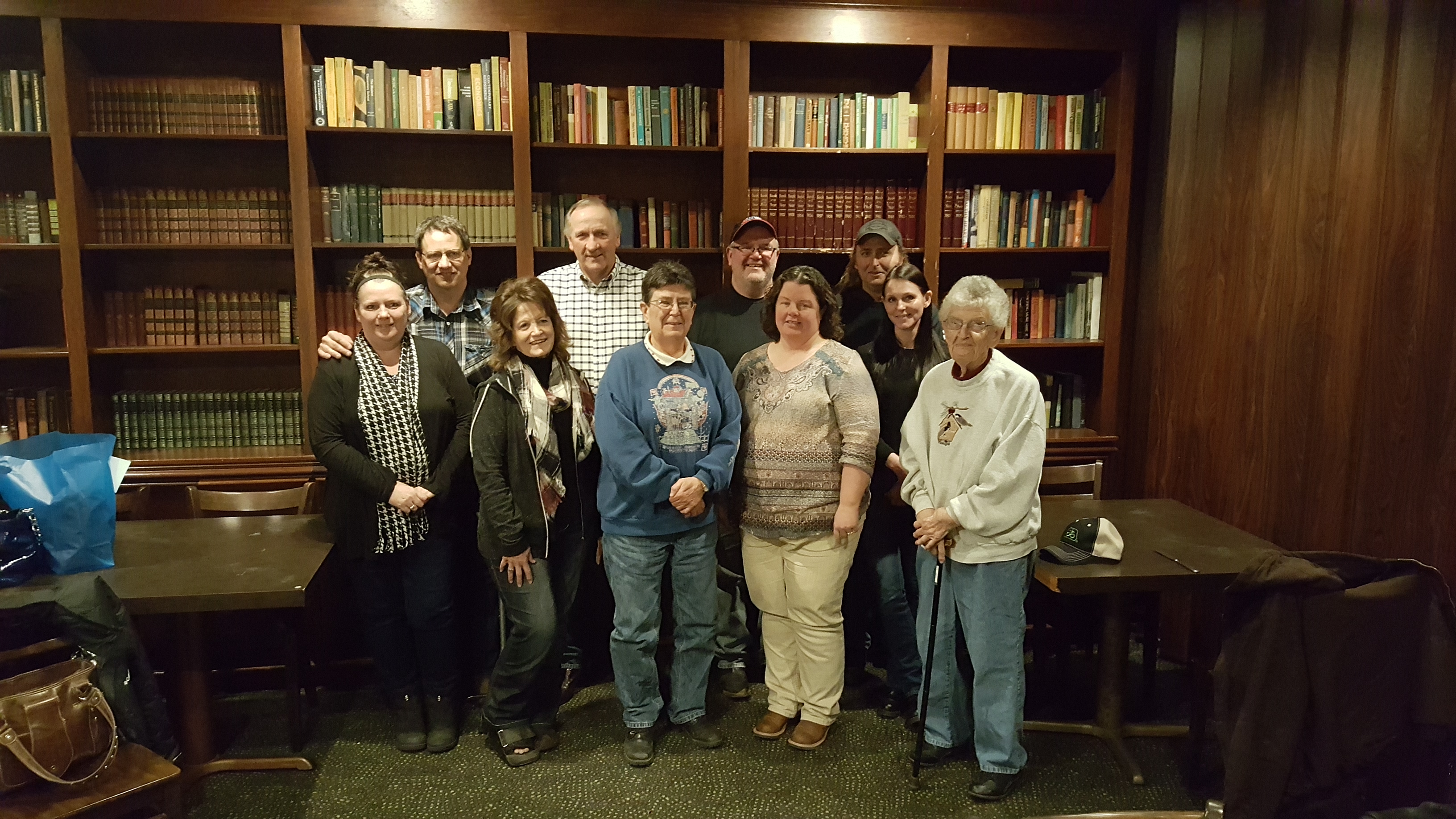
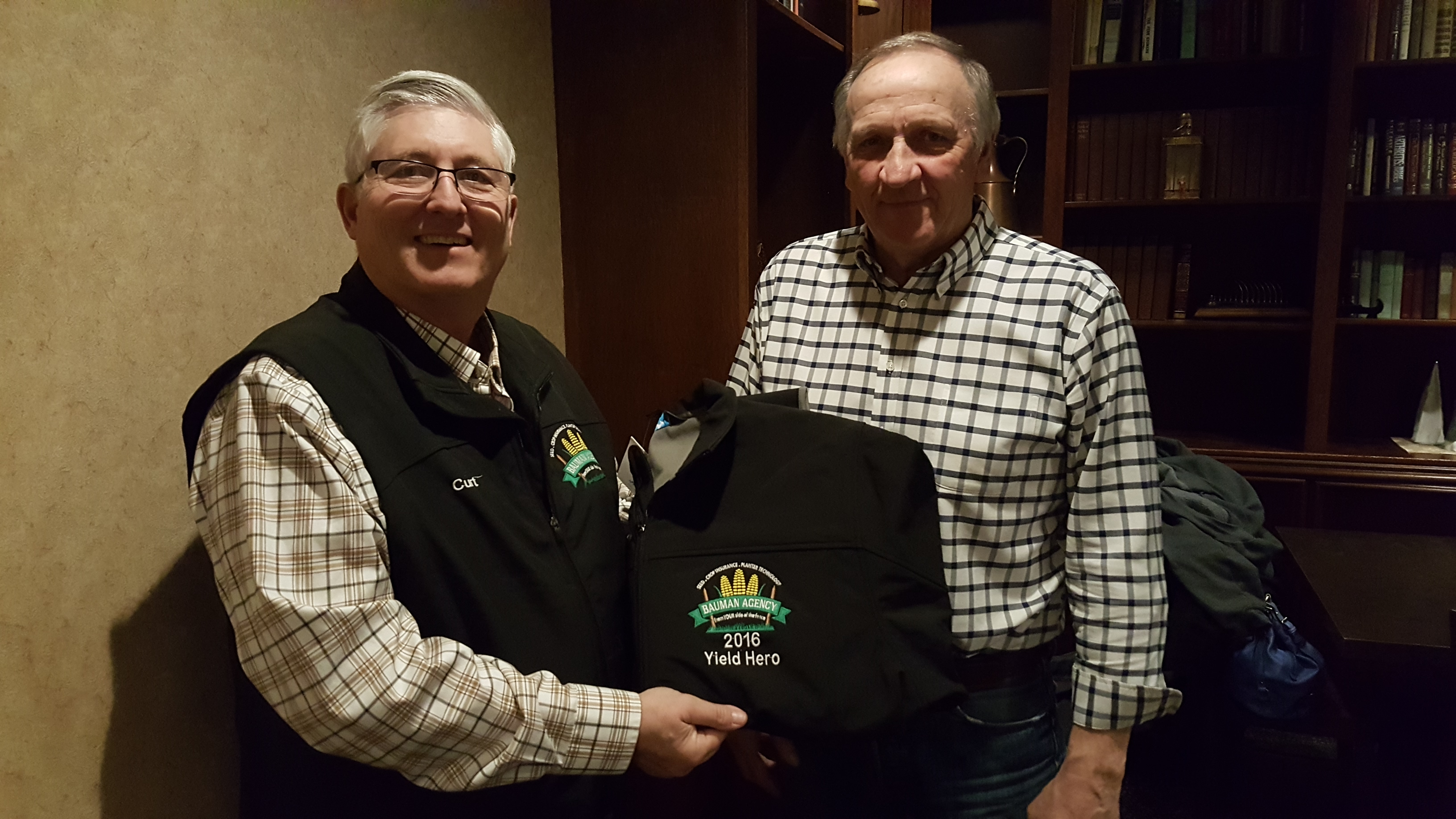
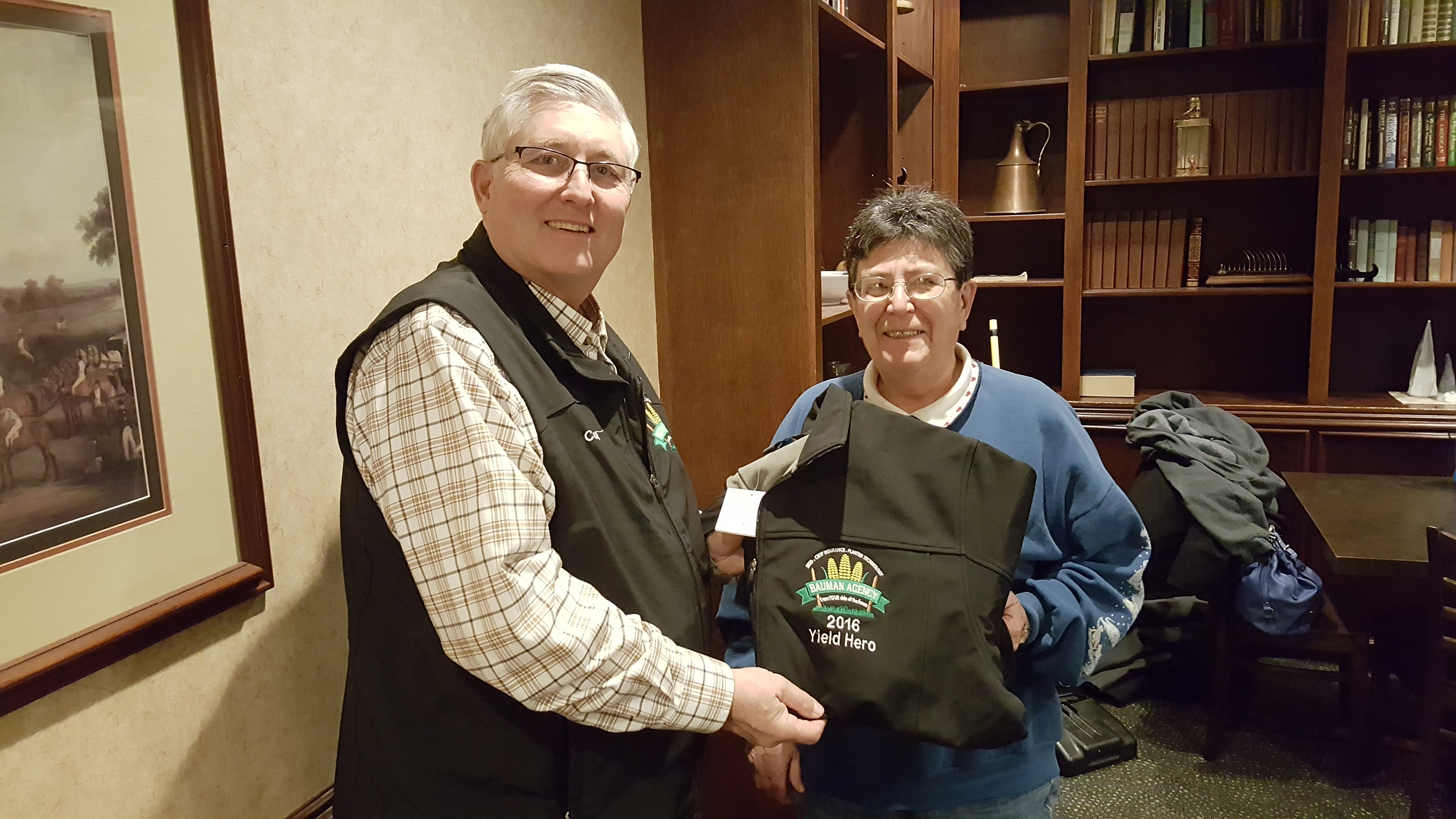
Congratulations to Bauman Agency’s 2016 Yield Heroes! Our first annual Yield Hero Contest was announced in September on our website and through a mailing that was sent to all of our Pioneer seed customers. Our growers were eligible to enter a yield result for each Pioneer variety planted. These 2016 Yield Heroes were honored at our first annual yield hero dinner where they were awarded their 2016 Yield Hero jackets.

Congratulations to…

Curt Bauman (left) and Scott Slepikas (right)

Scott Slepikas, winner with Pioneer P0339AMXT, Irrigated with 247.69 bu yield

Curt Bauman (left) and Steve Boomsma (right)

Steve A Boomsma, winner with  Pioneer soybean P18T26R2, Non irrigated with a 70.6 bu yield

Curt Bauman (left) and Dave Brooker (right)

Dave Brooker of Brooker Farms, winner with Pioneer corn P9188AMX, non-irrigated with 173.3 bu yield and irrigated Pioneer corn winner P0157 208.8 bu

Curt Bauman (left) and Peg Brooker (right)

Peg Brooker of Brooker Farms, winner with Pioneer corn P9188AMX, Non irrigated with 173.3 bu yield and irrigated Pioneer corn winner P0157 208.8 bu.

Curt Bauman (left) and Kevin Kleinsasser (right)

Kevin Kleinsasser  (and Kenny, not pictured), winners with non-irrigated Pioneer corn  P9703 155 bu yield, P0297 202 bu yield, and P0533AM1 192 bu yield and Pioneer non irrigated soybeans with  P20T79R2 55.7 bu yield and P22T69 with 67.6 bu yield

Not Pictured are Joe Chase with non-irrigated Pioneer corn P0339AMXT 220.48 bu yield, and Riverside Farm’s Sam Waldner, with irrigated Pioneer Corn varieties P0533AM1 192 bu yield and P0589AM 268.96 bu yield.

What a pleasure it is to work with growers who continually strive to improve yields! Congratulate them when you meet these progressive growers!

Just One More Thing

Every year I attend several one or two day conferences to and earn credits and maintain my Certified Crop Advisor accreditation. Subjects each year cover soil health, plant diseases, new pesticides and Insecticide interactions, and the latest in new equipment and technology that ag has to offer. Having been out of college for more than just a few years, my brain starts to fog up and I must take a day or two after the conference to reflect on what was presented. Usually, after mulling over the information that I was exposed to, I come up with an underlying theme. This year, my take away thoughts go to “just one more thing.”

I love to “adjust” things or try to tweak a piece of equipment to get it to perform just a little bit better than it was when I first tried to operate it. Surely, my idea is even better than theirs! This is in direct conflict with the practice of thinking “if it isn’t broken, don’t fix it” that I have been using in my herbicide programs for the last several years.

This year’s conferences carried a common theme on weed resistance. If you have a program that you feel is working perfectly, you better add something to the mix or you could end up with severe weed pressure from weeds that have adapted resistance to your current management program. This involves learning to identify herbicide families and how they work, then using at least three herbicide families per field per year-just one more thing I need to worry about. In 2017 I will add dicamba resistant soybeans to battle weeds.

When I first let my daughter, Callee, convince me that I needed a 20/20 planter monitor, I did it as a favor to her, because I already knew everything I needed to know about my planter….boy was I in for a surprise! 

Until I could quantify the planting errors that I was making in dollars and cents, they were not in my focus at all.   Once again I had to admit that Callee was right when, several years, ago Precision Planting’s automatic down force, called Delta Force, became the next one more thing which helped me break through yield levels that I never imagined reaching. For 2017 I am adding v-drive (electric meters) to control variable rate seeding and row shutoffs.

Split application of fertilizer is also on our 2017 cropping practice target, so, this year I am looking at several one more things! Split application adds that final push of fertilizer to reach the optimum yield potential on each acre farmed, not field potential but rather dialing in on each acre’s potential. Many one more things could be added to current practices without adding many total dollars to expenses while delivering the highest possible profits.

Plan to attend Bauman Agency’s “Just One More Thing” seminar on Feb 10 at the Nordby 4-H Exhibit Hall on the SD State Fairgrounds. Get insights into 2017 crop market outlooks and new crop insurance strategies as well as the latest in planter enhancements available to make your planter run better than when you bought it. Hopefully your head fills with ideas and you find your just one more thing to make 2017 the best year possible. See you there.

justonemorething2

Happy Thanksgiving!

Bauman Agency will be closed Thursday, November 24th and Friday, November 25th so that we can celebrate the Thanksgiving holiday with our friends and family. We will reopen, ready to serve your seed and crop insurance needs, at 8:30am on Monday, November 28th.

All of us Bauman Agency wish you a safe and peaceful holiday!

Image Credit: Tim Sackton

Taking the “Scare” Out of Resistant Weeds

Halloween. Ghosts, ghouls, goblins, mummies, witches, zombies and monsters. Scary? Naah. I’ll tell you what’s scary. Weed resistance! Want to hear a farmer cuss? Listen to him/her say the word Kochia, Waterhemp, or Marestail. Judging by the tone they use to say it, you are pretty sure it is a cuss word.

15726902253_aba60bbd64_o

These yield-robbing, noxious weeds are hard to get rid of.   When harvesting, it is easy to see the path a Kochia (a.k.a. tumbleweed) has taken as it tumbled across the field, blown by the wind, scattering seeds in its wake to take root. And when that tumbleweed comes to rest in the fence line, it generously continues to spread its seeds. A single waterhemp plant can produce over a half a million seeds. Controlling these resistant weeds is of major concern to soybean growers.

In the early days of soybean growing, a kid could make some extra money “walking the beans” for soybean farmers. Of course, if your dad was the farmer, the making money part was iffy. Hand pulling was the best practice to control weeds that resisted tillage and herbicides. Tillage practices were changed to conserve our topsoil and soil moisture, and then Roundup was introduced. When Roundup came on the market, it made us all good farmers because weeds were killed, crops weren’t harmed and the cost of the weed control was only $10-$15/ acre. But then weed resistance reared its ugly head and continues to pressure our fields.   Using a 50-50 corn, soybean rotation is one way growers deal with resistant weeds. Limiting field disturbances of tractors, animals, or people through infested areas helps decrease the spread of resistant weeds. Cleaning out fence lines is useful as well. But, even with all of these efforts, resistant weeds are a “growing” problem.

If controlling resistant weeds is an issue you are dealing with, it is critical get a management plan in place. Harvest is the perfect time to analyze how your weed management program is working. Continuing with the same program you have been using, if it isn’t effective, is just throwing good money after bad.

Research says utilizing multiple effective herbicides is needed. Each tillage practice needs an appropriate herbicide program to manage weed pressure. Relying on a single technology, herbicide, or class of herbicides are methods that helped bring us into our current resistant situation. The use of residual herbicides, following label directions, and timely application are key steps in helping manage herbicide resistant weeds. In addition, looking for soybean varieties that produce a canopy sooner can also cut back on competition from weeds. Vigilance in controlling weeds that show resistance has become a foremost mission for soybean growers.

Liberty Link technology in soybeans and Liberty weed control programs have worked well for some growers. Using a premix before planting and then following up with Liberty post planting might be part of an alternative weed control program.

Roundup Ready 2 Xtend soybeans contain the Genuity Roundup Ready 2 Yield trait technology stacked with a trait containing dicamba (a particular herbicide) tolerance which allows for control of some resistant weeds. Yield results that we have seen of Roundup Ready 2 Xtend (RR2X) in our area this fall have been terrific.

Halloween and harvest season go hand in hand. Harvest exposes the success and failures of our management programs. It’s also the season for purchasing seed for next year. Treat yourself. Analyze your weed resistance concerns now, make a weed control plan and use it as you make your cropping decisions for next year. The success of RR2X this year and the potential it offers as part of your resistant weed management strategy has created high demand for this new product. Act now. Don’t let “spooky” weeds get the best of your crops in 2017.

Image Credit: Troy Williams

Are You a Hybrid Yield Hero?

Bauman Agency is pleased to introduce our new Hybrid Yield Hero contest!

yield-hero-1

We are holding a yield contest for each individual Pioneer corn and soybean product for the 2016 growing season. The winner for each hybrid win a sign that will remain on the Bauman Agency Wall of Fame for the year. They will also win a personalized Bauman Agency jacket and an invitation for two to our Hybrid Hero award dinner!

How to Enter

  1. Download the Entry Form
  2. Fill out the form with information about you, your hybrid, and your operation
  3. Gather production evidence and supporting documentation
  4. Get the completed forms and the documentation to Bauman Agency at 19897 SD Hwy 37, Huron, SD by 4:30pm on November 15th
  5. Wait to find out if you are a Bauman Agency Hybrid Yield Hero!

America Salutes the Farmer

Politics. By now, with a little over a month before the Election Day, we may be tiring of all the political banter surrounding us. We may like one candidate and object to the other, or dislike all of the options. Some may even prefer to bury their heads in the sand and hope it all goes away. With a concern over the election of just who will become the new commander-in-chief, it is more important than ever that our congressional delegations from rural states have backgrounds that support agriculture.

Agriculture and crop insurance are very politically charged issues.   Look how long it took to get the 2014 Farm Bill into action and the attacks waged on crop insurance from different fronts on Capitol Hill. Discussions on the 2018 Farm Bill will begin sooner than we think. Nearly every ag publication we read tells us that, as a whole, the American public doesn’t understand agriculture and that farmers and ranchers need to be better at telling our story.

Although they may not fully understand it, a survey, commissioned by National Crop Insurance Services and conducted by North Star Opinion Research, reveals a positive public perception of agriculture and crop insurance in America. This particular survey was conducted in April of 2016 with 1,000 registered voters interviewed by telephone with live interviewers. Quotas were set for state, gender, race, and age to reflect past voter turnout with a margin of error of +/- 3.1%.

When asked if funding for programs that help farms and farmers is important, more than half feel that it is very important and another third think that it is somewhat important. Only 7% of those surveyed replied that it was not too important or not important at all. This positive response reflects bipartisan support as the consistent results come across the board from Republicans, Independents and Democrats. The survey’s findings also show strong favorable and bipartisan views of farmers as a group (86%).

3133178187_e87f6f53fe_o

Discounted crop insurance is supported by a 79% to 17 % margin. Presented with arguments for and against federal crop assistance for farmers, voters still say it is appropriate to help farmers by a two to one margin. 81% of voters agree that a strong farming industry is critical to national security. They also think farmers and taxpayers are better served by insurance delivered by the private sector, rather than the federal government, by a more than 20 point margin (54 to 33%). More than two-thirds of voters agree that farmer’s should share in the cost of the programs that protect them, and that farmers pay too much or the right amount for crop insurance. Similarly voter’s think the amount of loss sustained before payments are made is about right.

These overall positive results were honestly somewhat of a shock to me. On any given day, I don’t have to look very hard to see media that paints the agriculture industry in a negative light. There are numerous blogs, columns, Facebook pages, special interest groups, etc., whose main goal is to discredit the agriculture industry, the safety of our products, and the wellbeing of our livestock. This poll is reassuring to me in that the average American still has a high level of approval for farmers and the programs available to us that help ensure a safe, quality food supply. As the election nears and Farm Bill discussions begin, it is important to remind our congressional leaders of these findings. Voters believe that crop insurance and agriculture programs have a positive impact on America. This gives us something to build upon in this election year and the time leading up to the creation of a new farm bill, whenever it is enacted. The public’s bipartisan support is there and it is up to us to make that support be heard!

Image Credit: Julian Carvajal

If That Don’t Beat All

I used to think that the more years I farmed, the more experienced I became. With that experience, the less shocked I would be at certain scenarios as I should have “seen them all.” Then reality happens and I am reminded that I still have a great deal to learn when trying to discern our volatile markets. Let me shed a little light on how today’s market fiasco affects crop insurance coverage for 2016.

First of all, I have seen more variation in corn crop conditions this season, within just a few miles – sometimes in the same section, than I can remember in any previous year.  I have walked fields that could easily yield over 150 bpa (bushels per acre), while a field across the road will have a hard time achieving 75 bpa. It seems that in one field it paid to till, and a mile down the road it had a negative impact. Typically, our corn yields are significantly higher than soybeans compared to national averages, but this year, with some timely August rains, soybean yields could be well above the historical corn/soybean yield ratio.

9621025941_a0fe777317_o

This Spring, both corn and soybeans were under price pressure as we set our crop insurance base prices with both crops well below the 2015 price guarantees. Corn experienced a short lived summer rally in late June that left prices well above our spring price, then rapidly retreated to levels that make producers cringe and buyers smile. Soybeans, on the other hand, initiated a rally that, even after softening, is still well above 2015’s levels.

Most market forecasts told producers that it would essentially be impossible to make money raising soybeans this season and for farmers to be sure to use any tools available to minimize their losses. Soybeans could well turn out to be the one crop that turns a profit in 2016 – if we accomplish the current yield estimation and still have our current prices.

Corn producers who had a 120 bu APH (actual production history) and selected a 75% Revenue Protection coverage level for crop insurance coverage were guaranteed 90 bpa or roughly $347 per acre of revenue coverage on their farm. If the current trend in corn prices holds through harvest (about 15% lower than the crop insurance spring projected price), that dollar coverage divided by a lower harvest price makes his new yield coverage 104bpa (about 15% higher than the projected price).

Soybeans on the other hand have experienced a price rally and so revenue coverage will go up to reflect the higher value of harvested soybeans. A producer who has a 36 bu APH with 75% coverage had about $240 /acre coverage. If the current price holds through harvest, his coverage will go up to $273 per acre. Given the outlook for soybean harvest in Beadle County we should be marketing up to our guaranteed bushels at the higher current levels. If market history rings true and my predictions follow the past years’ outcomes, every producer should do the opposite of what I say as the price may skyrocket to $12/bu!

One last thought, if ever we need to have a yield monitor, it is a season like this when we can discover the true winning hybrids and best management practices to use on our farms. Contact us about YIELDSENSE, a yield monitoring system that is available for your combine that will help make the best possible decisions for 2017. Let us help you use the tools you already have to identify what things worked and what didn’t. It is one of the few factors that is truly in our control.

Image Credit: United Soybean Board